Showing posts with label Development Boards. Show all posts

Kalimpong declared as the 21st district of West Bengal by Mamata Banerjee

7:52 AM
West Bengal Chief Minister Mamata Banerjee on Thursday declared Kalimpong in the Darjeeling hills as the 21st district of the state. So far, Kalimpong used to be a sub-division under the Darjeeling district. Mamata, who is on a three day tour to north Bengal made the announcement while addressing the locals at the Lepcha Board Foundation Day Programme in Kalimpong.

Mamata also promised the allotment of six core rupees for the construction of proper infrastructure of the newly declared district. "Kalimpong will become a new district. We have allotted Rs 6 crore for building infrastructure here," she said on Thursday adding that tourism must flourish in the hills.
West Bengal Chief Minister Mamata Banejee wears a traditional headgear at the 5th founation day function of Lepcha Development and Cultural Board at Kalimpoog in Darjeeling
Addressing the people of the hills, Mamata said, "I want to work for the development of Darjeeling Hills. I am proud of the young generation here. If the hills do not progress, Bengal cannot progress."

In December last year Banerjee had announced that Kalimpong will be turned into a new district for ease of administration. However, many see it as a way to snub the Gorkha Janmukti Morcha (GJM) which has been leading a campaign demanding separate Gorkhaland state.

Mamata's announcement comes as a victory for the newly formed Jan Andolan Party (JAP) whose leader Harka Bahadur Chhetri have been lobbying hard to make Kalimpong a separate district after quitting the Gorkha Janmukti Morcha in September.

Mamata Banerjee showers sops on Kalimpong, Bimal Gurung says it’s ‘land of Gorkhaland lovers’
With Chief Minister Mamata Banerjee on Thursday announcing a slew of development measures in Kalimpong — which will soon be carved into a separate district — her one-time political ally Bimal Gurung of the Gorkha Janmukti Morcha (GJM) claimed that the hill town was the “land of Gorkhaland lovers”.

Speaking at the foundation day programme of the Lepcha Board, Mamata said: “The Lepcha Board has already built three thousands of homes for the poor. The various development boards must promote cultural activities and make Darjeeling clean and green. We want Darjeeling to prosper and become the best. Kalimpong will become a new district. We have allotted Rs 6 crore for building infrastructure.” Mamata is currently on a three-day trip to the hills concluding on Friday.

Ahead of addressing a rally in Kalimpong, Mamata met several local leaders, including those from the Lepcha, Tamang, Newa, Bhujal, Khas, Kami, Damai, Saki, Vishwakarma and Gurung communities. She was also accorded the status of ‘Kingchuk Dermit’ — the highest award of the Lepcha community, said Trinamool leaders.

Gurung calls meet to counter Mamata - Morcha seeks to score over Trinamul chief in Kalimpong
Bimal Gurung has decided to hold a public meeting of the Gorkha Janmukti Morcha's women wing in Kalimpong on Sunday, a day after Mamata Banerjee leaves the hill town, purportedly to show that Kalimpong is "a land of Gorkhaland lovers".

The chief minister reached Kalimpong today and will attend a programme of the Lepcha development board tomorrow, followed by another one of the Tamang development board the day after. She is scheduled to leave Kalimpong on Saturday.

In a written statement today, the Morcha president said Mamata was frequenting the hills, particularly Kalimpong, to "suppress the Gorkhaland voice" with the help of "some vested people who are trying to divide the Gorkha community into pieces" by forming development boards.

Gurung went on to say: "In reality, Kalimpong is a land of Gorkhaland lovers. However, some people with vested interests are belittling Kalimpong. The person who is dividing the Gorkha community is being felicitated as the chief minister who wants good of the Gorkhas."

He called on "Gorkhaland lovers" to look into the issue with all seriousness and asked them to give a befitting reply. "The issue of Gorkhaland cannot be suppressed by temporary benefits. To spread this message to Gorkhas across India, the Gorkha Janmukti Nari Morcha has decided to organise a meeting at Delo on September 25," Gurung said.

"The Nari Morcha members from Kalimpong should attend the meeting to demonstrate to chief minister Mamata Banerjee and anti-Gorkhaland forces the support for Gorkhaland," he added.

Delo is 5km from Kalimpong.

Even though Gurung had yesterday said the Morcha would win any election even if it was held now, his statement today, according to observers, suggests that he feels that the impact of Mamata's three-day visit has to be countered immediately.

Many hope Mamata will make some announcements with regard to the creation of Kalimpong district during her stay there. However, a senior Nabanna official said: "Creation of a new district involves a lot of paper work. But no file regarding creation of Kalimpong has moved yet."

According to sources, the personnel and administrative reforms department would first prepare the proposal and send it to the finance department before seeking clearance from the cabinet. "But nothing of that sort has happened," said a source.

Various web sources


Didi's Development Board win support in Darjeeling

7:09 PM
Amitava Banerjee, HT, 31 July 2016, Darjeeling:At the time when Gorkha Janmukti Morcha has been labelling the creation of numerous development boards as “divide and rule policy” of the state government, the Biswakarma Youth Association (BYA) has rallied for the development boards saying development activities of these boards will result in the uplift of Gorkhas as a whole. The state government has created development boards for 10 Gorkha communities inviting flak from GJM. The Morcha claims the state government is trying to divide the Gorkhas by creating development boards for various Gorkha sub-communities.

“It is a ploy to dilute the Gorkhaland demand. It is divide and rule policy of the government,” alleged Bimal Gurung, president, GJM.

Gurung’s stand on the development boards has been sketchy. On one hand, he has alleged that the development boards are dividing the Gorkha society; on the other hand, the same Gurung claims he does not have any problem with the development boards provided the boards are under the control of GJM run Gorkhaland Territorial Administration (GTA) and not the state government.
Didi's Development Board win support in Darjeeling
“The development boards are in no way weakening Gorkha society. Development boards will strengthen the sub-communities thereby strengthening the entire Gorkha community. Rather than weakening the Gorkha community, the Gorkha community is being strengthened by the boards,” said KB Baraily, chief co-ordinator, BYA.

On July 13, chief minister Mamata Banerjee announced the formation of three development boards for Kami (Biswakarma), Damai and Sarki sub-communities in the presence of the President of India and Governor of West Bengal in Darjeeling.


Development boards for Kami, Damai and Sarki communities announced

Writes Swareena Gurung 
Darjeeling 13 Jul 2016 Jubilation erupted among the Kami, Damai and Sarki communities when chief minister Mamata Banerjee today announced their respective development boards at Chowrasta in Darjeeling. The chief minister made this announcement at a programme organised to celebrate the 202nd birth anniversary of illustrious Nepali poet, Bhanu Bhakta Acharya

To mark a momentous event, President Pranab Mukherjee today joined the people of Darjeeling. The programme was organised by the West Bengal information and cultural department, where also in attendance were West Bengal Governor Keshari Nath Tripathi and GTA chief Bimal Gurung. The celebrations took place at Chowrasta where a temporary dais was set up and television screens placed to broadcast the event. The birth celebrations were kicked-off by the garlanding of the statue of Bhanubhakta Acharya by the President, chief minister, Governor and other guests. Ethnic communities such as the Rai and the Mangar presented cultural performances, while Karthik Das and his troupe presented a Baul performance.

Development boards for Kami, Damai and Sarki communities announced
202nd birth anniversary of Nepali poet, Bhanu Bhakta Acharya in Chowrasta Darjeeling
In keeping with the occasion, school children presented a Saraswati Bandana and read the Ramayana paath. President Mukherjee praised Bhanu Bhakta Acharya by saying his message was for the entire world and to humanity. Bhanu Bakta was instrumental in bringing together various princely states in Nepal during his time through his message to thus create modern day Nepal, he said. The bonding between India and Nepal remains unique, remarked the President. Mukherjee said, “We have a good relationship with Nepal and would like to strengthen this unity... Many of you are representatives of this solidarity. We take this opportunity to remember the great contribution of the Nepali poet who was born 202 years ago.”

Bhanu Bhakta Acharya, considered as the foremost Nepali poet, was born in 1814. He is attributed with translating the epic Ramayana into Nepali and is addressed by the honorific ‘Adikavi’ (first poet). Governor Tripathi said the form, the respect and the status accorded to the Nepali language by Adikavi Bhanu Bhakts was unique. He noted that the work of taking the Ramayana, respected and worshipped in every Hindu household, to the masses in their mother tongue, has been very commendable work. Chief minister Banerjee announced her government would hold meetings of the state cabinet in Darjeeling from time to time.

During the occasion, four Sahitya Academy recipients were felicitated by the state government. They included Gupta Pradhan from Darjeeling, Shankhar Pradhan from Bagrakote, Sanjeev Chettri from Kurseong and Shankhar Deo Dhakal from Gangtok.

EOI


Bhujel community memorandum to CM for development board

10:38 AM
Siliguri, July 11: Over 400 members of the Bhujel community met chief minister Mamata Banerjee at Bagdogra airport today and submitted a memorandum demanding a development board.

Mamata landed at Bagdogra around 2.45pm for a five-day trip to the Darjeeling hills.

Soon after she walked out of the terminal, Mamata went up to the Bhujel community representatives and accepted the memorandum drafted by the Bhujel (Khawas) Cultural Association.

"This is the sixth time that we met the chief minister and submitted our memorandum to her mentioning our demand for a separate development board. We met the chief minister for the first time in September last year. We had explained that the board was necessary to preserve our rich culture and tradition, which are on the verge of extinction," Kumar Khawas, the general secretary of the association, said.

"The total population of Bhujels is around 60,000 and we live in all three hill subdivisions, the Terai and Dooars. We are economically, socially, politically and educationally a backward community and most members live in tea estates, cinchona plantations and forest villages. Most are daily-rated workers and only a handful of Bhujels pursue higher education. A development board can help bring about comprehensive development for the community," Khawas added.
Mamata Banerjee in Darjeeling hills.
The state government has formed seven development boards in the hills - for Lepchas, Bhutias, Sherpas, Tamangs, Rais, Mangars and Limbus.

"A couple of days ago, sources in the government had said they would form a board to cover three (more) hill communities. This encouraged the Bhujels to approach the chief minister," an observer said:

On Saturday, a government official had said the state intended to form the West Bengal Biswakarma Welfare Board for the development of communities like the Kami, Damai and Sarki.

Khawas, who is a teacher, said: "In March this year, before the Assembly elections, we had met the chief minister and she had assured us that she would look into our demand after the polls. We have complete faith in her and we hope to hear an announcement that we Bhujels will have a development board soon."

The Newars, Khas and Bahuns from the hills have also demanded development boards


Telegraph


Mamata receives warm welcome from GNLF, and Development Boards

10:13 AM
Writes: Prashant Acharya

Chief Minister Mamata Banerjee was given a grand reception yesterday afternoon at the Bagdogra airport and in Rohini near Kurseong by hill communities that included the Khambu Rai, Lepcha Development Council members as also cadres of the Gorkha National Liberation Front.

This was the first time that GNLF supporters were seen welcoming the chief minister with khadas and Nepali scarves and reflects the ongoing bonhomie between the Trinamool chief and Mann Ghisingh, who the chief minister has appointed as vice chairman of the North Bengal Board of Sports and Games.
Thousands of people from both the plains and the hills had gathered at the airport since morning to welcome the chief minister, who landed around three in the afternoon and proceeded directly to Darjeeling without uttering a word to the press people present.

In Rohini, she was accorded a grand welcome with flowers, khadas and traditional garlands. The chief minister even alighted from her car to accept the greetings. Banerjee will be in Darjeeling for five days and welcome President Pranab Mukherjee on Tuesday who will be flying directly to the Lebong helipad from Bagdogra. On Wednesday, July 13 the President and Banerjee will attend a function observing the birth anniversary of Nepali poet Bhanu Bhakta Acharya. The chief minister is also slated to attend the annual meeting of the Darjeeling Tea Association during her five-day stay.
Over 400 members of the Bhujel community met chief minister Mamata Banerjee at Bagdogra airport yesterday and submitted a memorandum demanding a development board.
Mamata receives warm welcome from GNLF, and Development Boards
The state government has formed seven development boards in the hills - for Lepchas, Bhutias, Sherpas, Tamangs, Rais, Mangars and Limbus.

"A couple of days ago, sources in the government had said they would form a board to cover three (more) hill communities. This encouraged the Bhujels to approach the chief minister," an observer said:

On Saturday, a government official had said the state intended to form the West Bengal Biswakarma Welfare Board for the development of communities like the Kami, Damai and Sarki.

[With additional inputs from Telegraph]

Via TheDC

Sherpa Cultural Board vice-chairperson suspended

11:02 AM
Sherpa head & deputy spar

Writes Vivek Chhetri

Darjeeling, July 3: The West Bengal Sherpa Cultural Board has been gripped by a tussle with the chairman and the vice-chairperson accusing each other of high-handedness and financial impropriety.

The vice-chairperson, Nim Doma Sherpa, said she had been suspended by chairman Nima Wangdi Sherpa though he didn't enjoy such powers. She wrote to Darjeeling district magistrate Anurag Srivastava levelling a number of allegations against Nima.

Nim said: "He (Nima) suspended me as vice-chairperson in a high-handed manner and without a prior notice. In fact, he does not have the power to suspend me."

The vice-chairperson sought the chairman's ouster and said there was no financial transparency in the board. "All decisions are taken by the chairman," Nim said.

She further alleged that on June 21, the chairman had written to the owner of a property in Kalimpong, from where the board's office functioned, stating that the premises were not needed from August 1, 2016. "The chairman decided to close down the office because I started questioning his style of functioning."
Sherpa Cultural Board programme in Chowrasta Darjeeling
Referring to Sherwi Khangba, a scheme under which the board builds free houses for financially backward Sherpas, the vice-chairperson said: "Earlier, each beneficiary (of the housing scheme) used to get 2,400 bricks. When I found that only 2,000 bricks were being supplied for the construction of a house, all problems started."

Sources said there were no clear provisions in the board's rulebook on the ways to suspend the vice-chairperson.

Nima said the vice-chairperson had been suspended as there were many charges against her. "We had asked the vice-chairperson to monitor the construction of 100 of 500 houses. However, there were allegations that the materials we had prescribed were not being used. There were also allegations that the vice-chairperson was misbehaving with the beneficiaries and she was working against the interest of the board. That is why the executive body and the general body decided to suspend her. In fact, I had told the chief minister of our decision to suspend the vice-chairperson in Kurseong in March," said the chairman.

Asked about the vice-chairperson's suspension, Srivastava said: "The matter has been forwarded to the tribal development department."

Via Telegraph


Demand for Gorkhaland: Ethnic politics still key cards in Darjeeling

5:28 PM
Writes: Amitava Banerjee

Political debate in the Queen of the Hills this election season continues to revolve around ethnic issues.

The Gorkha Janmukti Morcha (GJM), a BJP ally piggybacking on the demand for a separate Gorkhaland state, has significant sway in north Bengal’s Darjeeling Hills, which include Darjeeling, Kurseong and Kalimpong constituencies.
The demand for Gorkhaland gained prominence in 1986 when Subash Ghising and the Gorkha National Liberation Front (GNLF) spearheaded a 28-month violent agitation that left 1,200 people dead. Bimal Gurung, a dissident GNLF leader, later floated the GJM and seized power in 2008.

Ever since, even national parties have been unable to sidestep this ethnic brand of politics.

However, it has been a balancing act for the BJP. Careful not to alienate the rest of the state, it has shied from using the word “Gorkhaland” but included the phrase “sympathetically examine the long pending demand of the Gorkhas” in its manifesto.
Mamata Banerjee, on the other hand, is projecting herself as an antagonist of the new-state demand.
Demand for Gorkhaland: Ethnic politics still key cards in Darjeeling

She set up boards for the “all-round development” of various communities. Lepcha, Tamang, Sherpa, Bhutia, Rai, Limboo and Mangar hill communities already have such boards, while others are in the pipeline.

“If the GTA (Gorkhaland Territorial Administration, an administrative setup with all 45 elected members owing allegiance to the GJM) would have done its job sincerely, there would be no need for development boards. Development boards are the demand of the people,” said Banerjee.

Not to miss out on the opportunity, the GJM too has promised similar boards under the GTA, and the BJP is banking on the promise to include 10 Gorkha communities and the Dhimal community in the Scheduled Tribes list.

Harka Bahadur Chettri, the sitting Kalimpong MLA who severed ties with the GJM and floated the Jan Andolan Party (JAP), is gnawing into the GJM support base in Kalimpong with the promise to upgrade the sub-division into a district.

When Gurung accused the JAP and the TMC of being “anti-Gorkhas”, the JAP responded by drafting the West Bengal Reorganization Bill 2016 for the formation of a separate state under Article 3 of the Constitution and dared the BJP to pass it in Parliament.


via: The Hindustan Times

Didi banks on divide and rule policy in Hills

9:54 AM
Writes Drimi Chaudhuri

April 17, 2016, Darjeeling As the Hills go to polls on Sunday, an issue that takes prominence among others is Chief Minister Mamata Banerjee’s decision to form development boards for individual ethnic communities.

While this could help the Trinamool Congress chief break the Gorkha Janamukti Morcha’s monopoly and help her gain a foothold in the area, most local leaders criticise her policy of “divide and rule”.

Mamata initiated the process of forming development boards for Hill communities — Lepcha, Mangar, Sherpa, Bhutia, Limbu and Rai— in 2014. Much to the chagrin of Morcha leaders, the process rendered the autonomous administrative body, Gorkha Territorial Administration, somewhat ineffective as the state government started releasing funds for these communities bypassing Morcha leaders, who dominate the autonomous body.

Morcha president Bimal Gurung said the move was taken for “political gain”. “The boards have only built toilets; there has been no real development,” he said.
Gurung found support from Manish Rana Mangar, assistant secretary of Mangar Sangh Bharat.

“The formation of these boards is a ploy to create friction between communities. It has become clear that this was done with the Assembly polls in mind. The government’s long-term plan seems to divide Gorkhas so that no one can demand a separate state in future.”

Gurung’s bête noir Hadka Bahadur Chhetri, who left the Morcha to form his own outfit, however, countered the criticism.

“Morcha leaders are unhappy because the government is directly releasing funds to these boards, which makes it difficult for Gurung and his associates to make money,” he alleged.

He claimed that most of these communities are moving away from Morcha due to the corruption and nepotism of its leaders. Chhetri found support from Neema Shering Sherpa, convenor of the Sherpa Cultural Board. “The board is not confined to community development; it has also given us a separate identity. The demand for Gorkhaland is like a fairy tale, it’s a sentiment. We’ve been with this demand and continue to be with it but common people have always been short-changed in the name of Gorkhaland,” Sherpa said.

Palden Bhutia, chairman of the West Bengal Bhutia Development Board, said, “Everybody used to think Gorkhas were the only community here but now they realise there are others too.

 “Unlike earlier times, when funds used to be sourced through leaders, the money is now going to the needy people only. This makes a lot of people unhappy.”

Sources said Banerjee was unhappy with Trinamool’s failure in the 2014 Lok Sabha elections, when she fielded ace footballer Bhaichung Bhutia, a move she hoped would help her get a grip on the Hills, which has been out of bounds for mainstream parties since Gorkha National League Front started the Gorkhaland agitation in 1986. “The Left preferred to keep Gorkha leaders in good humour and formed an autonomous hill council. Leaders became flush with crores in government funds but the area remained under-developed. If the boards can manage to change that, it would be a welcome change,” said Darjeeling-based political analyst PN Lama.

Lama, however, pointed out that Mamata’s decision to form individual community boards is in essence a reversal of the unifying process 19th Century Nepalese poet Bhanu Bhakta Acharya had undertaken.

Besides translating the Ramayana from Sanskrit, he had brought together Gorkha tribes and created a nationalistic identity.

A large number of local residents say that their support for Gorkhaland notwithstanding, most would prefer development in terms of education, healthcare and employment so people do not have to move to metropolitan cities in search of jobs.


Via deccanherald

Bimal Gurung pins hopes on Gorkhaland, BJP on Gurung

8:52 AM
Writes: Esha Roy

Bimal Gurung has been carrying the aspirations for Gorkhaland statehood on his shoulders. Now the 52-year-old carries the aspirations of the BJP in Bengal, too.

Across Darjeeling district, banners of Gorkhaland adorn shops. Despite the formation of the Gorkhaland Territorial Authority (GTA) in 2012, the demand for a separate state is still alive, and is the main campaign platform in this election. It is also the reason why Gurung’s Gorkha Janmukti Morcha (GJM) is unabashedly a BJP ally and has decided to field candidates on BJP tickets.

“The BJP will open its scorecard in North Bengal with our candidates. The GJM has five candidates. Five other GJM candidates were fielded on BJP tickets. We are confident of winning these seats,’’ a Gurung aide said.

Seated surrounded by supporters, Gurung said, “We are loyal to the BJP because it is the most sympathetic to our cause for a separate state for Gorkhas. This alliance will continue in future elections,” said Gurung. “When I met (PM Narendra) Modiji during his rally in Madarihat, we discussed many issues. We will work things out.” The understanding is implicit: the BJP will make inroads into Bengal while Gurung will have a shot at Gorkhaland.
Gurung pins hopes on Gorkhaland, BJP on Gurung
Bimal Gurung in Kalimpong GJM pre-poll Rally
Over the past year and a half, relations have soured between Gurung and Chief Minister Mamata Banerjee. “She interfered in GTA matters. There is a lot of resentment against her,’’ a GJM source said.

In a run-up to the elections, Mamata announced development boards for communities in Darjeeling district such as the Lepcha Development Board and Tamang Development Board. These are separate from the GTA, which is responsible for governing Darjeeling district. While the Gorkhas are the dominant community here, Lepchas, Limpus, Tamangs, Bhutias, Rais, Dukpas, Sherpas and Tibetans also form a sizeable population.

“Mamata is trying to divide the people of Gorkhaland on communal lines. I think we got the GTA by mistake — they didn’t really understand the gravity of it. Ever since, she has been trying to break the identity of Gorkhaland. I am asking for my rights, and Gorkhaland is my right. She can form as many development boards as she wants, but these boards are also supporting us,’’ Gurung said. However, seeing the advantages of having their own boards, and thus a source of funding, some feel that these communities may consider moving away from the GJM. The shutting of tea estates will also cost Mamata, Gurung added.

Party insiders said Mamata’s move to derecognise Nepali as an official language had angered people. “Besides, the schemes she talks about in her campaign have not entered the hills,” said a GJM member.


Via: Indian Express

Development boards inject identity politics into Hills political cauldron

1:42 PM
Darjeeling/Kalimpong: The creation of Hill boards for the uplift of ethnic communities—Lepchas, Tamangs, Sherpas, Bhutias, Mangars and Rais—has added a new dimension to the effervescent politics in the Hills.

Though the GJM, which runs the GTA, views the boards as an attempt to fracture its support base in the Hills, fuelling identity politics, the move seems to have won Mamata Banerjee many admirers for championing the cause of the marginalized. “What is wrong if the Hills people who have been deprived of benefit for years get something? The indigenous communities saw refugees receive facilities but they never got anything. Though it led to some disquiet, it did not trigger a clash. Now, the state is finally giving what was long overdue. It will definitely have political implications, both in short and long term,” said writer Nanda Hakim.

The announcement of the Lepcha board in August 2011 opened the floodgates with similar development boards being set up for the Tamangs, Sherpas, Bhutias, Mangars and Rais, who account for nearly 10 lakh people in the Hills and elsewhere. Two more boards are in the line, for Limbus and Newars. All these boards receive funds from the state for the development of facilities for the communities.

Lyang Song Tamsang, chairman of West Bengal Mayel Lyang Lepcha Development Board that has received Rs 86 crore in 2013-2015, says they received a bigger boost in the past three years than in the earlier 60. “The funds have helped build 3,000 homes for poor Lepcha families, and 40 Lepcha night-schools are now housed in pucca buildings. We will convert the remaining 20 into pucca structures and add another 20 night schools by next year,” said Tamsang.

Lepchas learn their language as well as math and English from British and Amercian teachers at these schools. The money has also initiated a stream beautification project. As most Lepcha families live in remote hamlets, adjacent to streams and dependent on agriculture, the project is aimed at providing them with a source of clean water to drink and irrigate their crops.

“The state tried to fulfil a long-standing demand for introducing Lepcha language in primary schools and appointed para-teachers but the GTA went to court, saying it was an interference. Those para-teachers now teach the language at the night schools,” said Tamsang, hinting at the underlying friction caused by the boards.

The West Bengal Bhutia Development Board is yet to run into any hurdle. But board chairman Palden D Bhutia, a former Darjeeling Municipality chief (1999-2004), remains wary. They have spent Rs 10 crore on 500 homes for needy Bhutia families. But the money has also created envy. “The amount that the boards are getting isn’t magic. Even earlier, development funds came but no one knows where it disappeared. Now that it is coming directly to the community, the opportunity to siphon off has ceased,” he said.

Political observers say Bhutias, Lepchas, Tamangs and Sherpas will be favourably disposed towards Mamata. While the communities may not vote directly for Trinamool, a good section could vote for Harka Bahadur Chhetri’s Jan Andolan Party (JAP), which has Mamata’s backing.
“It will be good to receive the support of various communities,” said the JAP candidate from Kalimpong, which houses several board offices.

But Nepali Sahitya Sammelan member S K Giri questioned the future: “Owing to Mamata’s interest, the boards have been set up like para clubs. If the government changes, what will happen to the board that have no constitutional legality?”

Tamsang said board officials have requested the state to make the boards statutory and incorporate them in Government Act instead of Societies Act.


Via TOI

GJM to complaint against development boards to Election Commission

11:28 AM
TMC
Morcha mulls moving EC against development boards

It’s election time and things have started heating up in the hills. For one, the Gorkha Janmukti Morcha has decided to lodge a complaint with the Election Commission against the community development boards formed by the state government for allegedly violating the model code of conduct.

GJM general secretary Roshan Giri yesterday said the chairmen of the Sherpa, Bhutia, Tamang, Mangar, Khambu Rai and Limbu community development boards held an indoor meeting on Friday in Darjeeling where they decided to support the Trinamool despite holding offices of profit.

On Friday, representatives and members of the six associations under the radar held a meeting to decide ways to pursue measures for safeguarding and promoting their tradition, culture and language. The contentious issue of which party to support in the election was also discussed in the meeting and the associations unanimously decided to extend support to that political party (read TMC) that had helped the communities.

However, all the six chairmen had clarified the meeting was not convened by the development boards but by the associations and that they had not forced any member to vote for the TMC or any other political party.

“We will approach the ECI and lodge complaints against the six development boards for violating the model code of conduct. How can officials of development boards that function under the state government speak for a party? These officials receive salary and vehicles and other perks from the state government,” Giri said following the public meeting held by the GJM this afternoon in support of the party’s candidate from Darjeeling.

Nonetheless, the GJM general secretary was quick to add that the development boards would not affect his party’s prospects on April 17, the day of voting. “We are more concerned about polling being fair and clean even though we are confident of winning handsomely even if the development boards support the TMC,” he said.

GJM president Bimal Gurung also echoed Giri saying the Mamata Banerjee-led TMC would taste defeat, in spite of the state government showering money worth crores to the boards ahead of the election. “She has spent crores on the development boards just to garner votes. But one must remember that when it comes to issues pertaining to identity, statehood and aspirations, the hills will always remain united even if more doles are offered,” he said.

“The state government may try to tear us apart by creating divisions. But we will keep on mending the damage until we achieve statehood,” thundered Gurung to loud applause from the crowd gathered at the Motor Stand area of town.

According to the GJM chief, Prime Minister Narendra Modi’s promise during his April 7 speech in Siliguri that the 11 communities of the hills would be granted tribal status was a stepping stone towards achieving statehood. “Modi-ji himself told me that day that the 11 communities would be granted tribal status. I would like to remind you that he once said the dreams of the Gorkha people were his dreams too. We must remember that things are achieved one at a time,” said Gurung, adding he has invited the prime minister to Darjeeling.

Darjeeling GJM candidate Amar Singh Rai trained his guns on the TMC-JAP-GNLF ‘jote’ (alliance) saying it was temporary and that its intentions were ill. “JAP says development is its priority, the GNLF wants Sixth Schedule status and the TMC is anti-Gorkhaland. The alliance is an unholy nexus against our statehood aspiration and will be scattered when they taste defeat,” he said.

Meanwhile, the other GJM leaders who spoke at the campaign meeting appeared more interested in denouncing JAP president Harka Bahadur Chhetri than rallying for the party candidate.


Via: EOIC,

Hill development boards to support the Trinamul Congress in Assembly polls

8:27 AM
Darjeeling, April 8: The chairmen of six development boards of different communities in the hills today said they wanted members of their communities to support the Trinamul Congress in Assembly polls as a token of gratitude for the formation of the bodies.

The heads of six development boards formed by the Mamata Banerjee government were present at the first-of-its-kind meeting at the Gorkha Dukha Niwarak Sammelan Hall today. The meeting was addressed by the chairmen of Tamang, Sherpa, Bhutia, Mangar, Limbu and Rai development boards.

The chairman of the Lepcha development board, however, was absent from the meeting "as the representatives of the community were busy with preparations for their own meeting".

Sanjay Moktan, the chairman of the Tamang Development and Cultural Board, said: "The state government has helped us in our development and we have, therefore, decided to help that political party."

Asked if that political party was the Trinamul Congress, Moktan said: "Obviously. If the leadership of that party is supporting us, we, too, need to back them. However, we cannot tell all our community members to vote for a particular party. We believe that it is our responsibility to support that party which is helping us."
The chairmen of the 7 hill development boards at the meeting.Picture by Suman Tamang
The seven communities, including the Sherpas, for which the boards have been formed, make up more than 35 percent of the hill population.

Observers, however, believe every member of a particular community is not expected to follow the chairman's line of thought. "Moreover, there are also rival organisations within the communities which are not too enthused about the development boards," said an observer.

Moktan said the meeting had also been called to end the "oppression" being perpetuated by a political party. "The meeting has also been called to seek freedom from the oppression that is being perpetuated by a political party. We believe the party is not allowing us to develop our language and culture."

Although Moktan did not take the name of the political party, it was clear that he was referring to the Gorkha Janmukti Morcha.

Asked about the oppression, Moktan said: "When a member of the Tamang community was killed in broad daylight here, we could not even protest."

The killing was in reference to the murder of Akhil Bharatiya Gorkha League leader, Madan Tamang, in May, 2010.

Palden Bhutia, the chairman of the Bhutia Development Board, said: "All we want to say is that we need to feed the cow that provides milk to us."

Bhutia said the meeting had been organised not by the development boards but by organisations representing the six communities.

Nima Wangdi Sherpa, the chairman of the West Bengal Sherpa Development Board, said: "Apart from the chairmen of the six development boards, representatives of the Darjeeling Indigenous Schedule Caste Welfare Association and the Bhujel community were also present. The two communities are demanding development boards and we would extend support to them."

With regard to the absence of the chairman of the Lepcha development board, Sherpa said: "As the representatives of the community were busy with preparations for their own meeting, they could not attend today's meeting."


Telegraph

Hill Development boards meeting on Assembly election in Darjeeling

7:57 PM
Writes Vivek Chhetri

Darjeeling, April 6: The heads of seven development boards formed for different communities in the Darjeeling hills have decided to hold a meeting here on Friday to discuss the stand they will take on the coming Assembly election.

Although the chairman of West Bengal Sherpa Cultural Board said the meeting would discuss "issues related to the upcoming election", sources said the purpose of the talks was to decide whether the heads of the boards should support any party in the polls and if so, how they should send the message to the members of the communities.

The development boards' formation by the Mamata Banerjee government has given a toehold to the Trinamul Congress in the hills, where the writ of the Gorkha Janmukti Morcha largely runs.

The meeting is considered significant as this is the first time that the chairmen of the boards are formally sitting together to discuss an election strategy.
Hill Development boards meeting on Assembly election in Darjeeling
Lyangsong Tamsang, the chairman of the Mayel Lyang Lepcha Development Board,
after receiving a cheque for Rs 10 crore from Mamata Banerjee at
Ronaldshay Park in Kalimpong
Nima Wangdi Sherpa, the chairman of the Sherpa cultural board today told The Telegraph: "It is true that a meeting of the chairpersons of seven boards will be held at the Gorkha Dukha Niwarak Sammelan Hall in Darjeeling on April 8. The agenda is basically to discuss issues related to the upcoming election."

He, however, refused to get into the details of the meeting's agenda.

Sources said the chairmen of the development boards would be discussing the stand they would take in the polls. "If they decide to support any party, then, they will have to find a way to present it before the members of their respective communities. Those things will also be decided at the meeting," said an aide to the chairman of one of the boards.

The state government has so far formed boards for Lepcha, Tamang, Sherpa, Bhutia, Mangar, Rai and Limbu communities which make up 35 per cent of the hill population.

"Apart from the chairpersons, leaders of other communities like Scheduled Caste, Bhujel and probably Newars, which are also demanding development boards, are likely to attend the meeting," said Sherpa.

Asked about the likely outcome of the talks, Sherpa said: "We cannot say anything at the moment."

Observers believe the board chairmen will most probably decide on supporting the Trinamul candidates in the hills. "It is obvious that they will decide to support the Trinamul candidates because they were given positions by the state government. Most of the board chairmen were present at Mamata Banerjee's election rally in Kurseong on March 15," said an observer.

"However, the most interesting thing would be how they appeal to community members to support Trinamul. Will it be a direct appeal or will they send across a subtle message to voters," said the observer.

The observers believe the chairmen of the boards are under pressure. "Mamata Banerjee has nominated them to the posts with a belief that they wield a lot of clout among their respective communities. So, these leaders are obviously under pressure to deliver," said an observer.

Morcha president and GTA chief executive Bimal Gurung has always said the boards were created to divide the hill population. Realising the importance of the development boards in the upcoming election, he had met leaders of different communities over the past few weeks.

"Gurung has held meetings with leaders of Sherpa, Limbu, Rai and Christian communities throughout March at Gorkha Rangamanch Bhavan in Darjeeling. Gurung is confident that development board leaders cannot influence a lot of voters ," said a close aide to Gurung.

The GTA had announced in February that development boards for 19 hill communities would be established with an allocation of Rs 5 crore each.


Telegraph

Mamata Banerjee to campaign in Kurseong on March 15 for Assembly polls

10:04 AM
Writes Vivek Chhetri

Darjeeling, March 6: The hill unit of the Trinamul Congress today said Mamata Banerjee would hold a public meeting in Kurseong on March 15 betraying the party's hope that it could pose a major challenge to the Gorkha Janmukti Morcha in the Assembly polls on the back of the launch of development boards for different communities.

Binny Sharma, general secretary, Darjeeling (hill) Trinamul, said: "Our leader, Miss Mamata Banerjee, will be addressing a public meeting in Kurseong on March 15. Although the venue has not been fixed, it will most probably be held at Monteviot ground."

Trinamul sources in Calcutta couldn't confirm if Mamata would speak in Kurseong, but said she was likely to kick off her election campaign from the hills.
Mamata Banerjee to campaign in Kurseong on March 15 for Assembly polls
Mamata Banerjee in Kalimpong - a file photo
Shanta Chhetri, who had been elected to the Assembly three times on GNLF ticket, was fielded by Trinamul in the Kurseong seat. Sarda Rai Subba and Harka Bahadur Chhetri have been fielded by the party in Darjeeling and Kalimpong, respectively, though confusion prevails over the latter's candidature. Elections will be held to the three hill Assembly segments on April 17.

Sharma said Mamata was also expected to campaign for a day in Siliguri on March 14.

Sources in Trinamul said Mamata was confident that Trinamul would put up a strong fight in the three seats. "The confidence stems from the fact that she has formed separate development boards for many hill communities and she expects their support for Trinamul candidates," a Trinamul leader said on condition of anonymity.

So far, development boards have been formed for Lepchas, Tamangs, Sherpas, Bhutias and Mangars. The chief minister has announced development boards for the Limbus and Rais as well, but they have not been formed yet. These communities together make up over 50 per cent of the hill population.

The elections, observers believe, will show if political benefits will accrue to Trinamul from the boards. "This is the elections where it will be clear whether Mamata's development boards have managed to win the hearts of the hill people," said an observer.

The Morcha, on the other hand, has been alleging that the boards were formed with an intention to divide and rule the hill population.

Shanta Chhetri who had joined Mamata's party on February 22, 2014, said she would not speak against anyone in the campaign. "A week after my house had been burnt down by Morcha activists on February 18, 2010, my husband died and people were not allowed to attend the funeral. I have gone through the worst. Yet, I will not speak against anyone in the election campaign," she said.

Telagraph

Rai Development Board has started its operation

11:05 PM

Writes: Rajeev Ravidas

The West Bengal Rai Development Board has started its operation with  30 general body members owing allegiance to the Kirati Khambu Rai Sanskritik Sansthan, although the objection raised by the Khambu Rights Movement was yet to be addressed.
M.S. Rai, the chairman of the Rai board, said the first governing body meeting of the board had been held in Darjeeling on Saturday. "The board belongs to all Khambus living in Bengal. It will work for their development. Today, we distributed Rs 1 lakh each to 20 poor Rai families from the hills. This is the first instalment of Rs 2 lakh we intend to give to each of these families for constructing houses," he said in Darjeeling.
The KRM has expressed unhappiness at the board's functioning without taking it into confidence. "We were told by both the Darjeeling district magistrate and S.K. Thade (principal secretary, backward classes welfare department) that even though the notification constituting the general body had been issued on February 12, it would not be acted upon till the differences between us and KKRSS were resolved. This is totally unexpected. We will decide on our next course of action later," said A.K. Rai, the KRM president.
The KRM had staged a hunger strike from February 17 to 24, demanding that its supporters be made the board members.
The 31-member general body has just one supporter of the KRM.
Observers say that the notification could be potentially backdated to skirt around the PIL and upcoming elections code of conduct.

via TheDC

Kolkata HC accepted PIL against Hill Development Boards

Darjeeling, Feb. 25: Calcutta High Court has accepted an apolitical organisation's PIL seeking the dissolution of development boards for different communities in the hills, saying they discriminated against citizens based on caste and creed and no yardstick was followed in the formation of the bodies.

Mamata Banerjee had announced boards for five communities, but the Gorkha Janmukti Morcha had alleged that the chief minister was adopting a "divide and rule policy" in the hills by doing this.

The PIL was filed by Pravin Gurung, the general secretary of the Darjeeling Tarai Dooars Gorkhali Adhiwashi Welfare Society.

Speaking over phone from Calcutta, Anand Bhandari, the lawyer for the petitioner, said: "The divisional bench consisting of Chief Justice Manjula Chellur and Justice Arijit Banerjee is hearing the PIL and has directed the state government to file an affidavit-in-opposition in three weeks. The next hearing will take place after four weeks."

The order to the government to file the affidavit was passed by the division bench on February 19.

The court refused to pass an interim order stopping the distribution of funds to the development boards as demanded by the petitioner.

State law minister Chandima Bhattacharya declined comment on the PIL. She said: "The matter is sub-judice. I cannot make any comment on the issue. But I can say what the chief minister is trying to do is for the welfare of Limbu and Rai communities."

Pravin Gurung today said: "We believe the state government has discriminated against many communities. While some communities are getting benefits, others are being deprived of them. Moreover, the yardstick to grant a development board and funds too is not clear."

Citing some examples, he said: "For instance, as per the 2011 census, literacy rate of the Bhutia and Limbu communities is 81.1 per cent and 87.8 per cent, respectively. However, the literacy rate of Lodha and Savar tribes is 45.5 per cent and 40.6 per cent, respectively. Although boards have been formed for Bhutias and Limbus, there is no such body for communities which are educationally backward."

When the first board was formed for the Lepchas by Mamata, it was said that the boards would be apolitical cultural entities. But Morcha president Bimal Gurung had said development boards should be formed for all communities in the hills rather for a few of them. Gurung, as the GTA chief executive, also announced development boards for 19 communities in the hills. So far, development boards have been formed for Lepchas, Tamangs, Sherpas, Bhutia and Mangars. The chief minister has announced development boards for the Limbus and Rais as well, but they have not been formed. While Mangars and Rais are among Other Backward Classes (OBC), the rest of the communities that have been granted or promised boards are Schedule Tribes.

Pravin Gurung said it was strange that communities whose population was dwindling were not granted development boards. "As per the 2011 census, the Tamangs population was 1,46,203, and a board was formed for them. But the population of Mru and Khond communities is only 196 and 660, respectively and still, no development body was offered to them," he said.

"The Indian Constitution does not have provisions to provide preferential treatment to certain sections even among the STs. In Bengal, there are more than 40 communities which have been classified as STs but development boards have not been formed for all of them. Boards haven't been announced for other OBC sections and it is against the provisions of equality that is enshrined in the Constitution. There should be no discrimination based on caste and creed," said Gurung.

The petitioner has demanded that a single development board covering all tribal communities in the state be formed. "For this, all development boards must be dissolved. Or else, development boards must be formed for all communities in the state," he said.

Telegraph

Khambu Rights Movement - Indefinite hunger strike against 'delay' over Rai board

10:08 AM
Kalimpong, Feb. 16: Fourteen members of the Khambu Rights Movement launched an indefinite hunger strike at Tricone Park here today to protest against interference by some Kirati Khambu Rai Sanskriti Sansthan members that has allegedly delayed the creation of a Rai board.

The Khambu Rights Movement (KRM) was formed on January 16, 2013, and it operated under the Kirati Khambu Rai Sanskriti Sansthan (KKRSS) to demand a Scheduled Tribe status for the Rais. But the two groups started falling apart, particularly after the KRM went whole hog on the development board issue.

Rais and Khambus are synonyms for a single community.

"A board for the Khambus had been announced (by chief minister Mamata Banerjee on January 22) in Darjeeling. When we went to Calcutta earlier this month to complete certain formalities related to the formation of the board, some opportunists associated with KKRSS in Darjeeling also went there and claimed that they would form the board," said KRM spokeman Manoj Rai.
Khambu Rights Movement - Indefinite hunger strike against 'delay' over Rai board
Khambu Rights Movement which was earlier demanding for Tribal Status
"This has resulted in delay in the formation of the (Rai) board. The delay is not affecting those who are well off but the ordinary Khambus, who are a deprived lot," he said.

All 14 KRM members participating in the hunger strike today are from Kalimpong subdivision. Sources said more members from other parts of the hills were expected to join them soon.

Binesh Rai, the KRM coordinator, alleged that the KKRSS was never in favour of a Rai development board but at a time the state government was on the verge of setting it up, some KKRSS members were trying to lay claim to it.

"We were shocked to learn that people, who in the past were against the formation of a board, went to Calcutta and demanded that they be allowed to form one. We are totally against these people. We don't want any of them in the board. We may agree to take few members of the KKRSS, who have not spoken against the board, in the general body but none in the executive body of the board," he said.

The KKRSS president, Tara Kumar Rai, however, claimed that they had already formed a board with a six-member executive body, including the chairman and vice-chairman, and 25 general body members. "The registration has also been completed. We had submitted our list (to the state government) about 10 days back. None of the office-bearers of the KKRSS are in the executive body and general body of the board. The chairman will be N.S. Rai," he said adding that he did not want to comment on KRM's allegation.

The KRM coordinator, Binesh Rai, rubbished the KKRSS claim. "I am cent per cent certain that the board has not been formed yet. They don't know what they are saying," he said.

Now GTA to form Development Boards for 19 hill communities

10:36 AM
Vivek Chhetri

Darjeeling, Feb. 15: The GTA has decided to form development boards for 19 communities in the hills and allotted Rs 5 crore for each of them in an apparent move to neutralise Mamata Banerjee who set up similar bodies to the chagrin of the Gorkha Janmukti Morcha.

The Morcha has been alleging that Mamata has adopted "divide and rule" policy in the hills by forming development boards for different communities. Till date, the state government has created development boards for the Lepcha, Tamang, Sherpa, Bhutia and Mangar communities and also promised to look into the demands from the Rais and Limbus.

The Morcha-controlled GTA Sabha, however, passed a resolution on February 12 to form development boards for 19 communities which have significant population in the hills with an initial grant of Rs 5 crore for each of them. The 19 communities are Gurung, Bhujel, Newar, Rai, Sunuwar, Thami, Yakkha (Dewan), Khas, Mangar, Jogi, Limbu, Tamang, Dukpa, Lepcha, Sherpa, Bhutia, Yolmo, Scheduled Caste and Adivasis.
Now GTA to form Development Boards for 19 hill communities
Bimal Gurung with Mamata Banerjee in the past
"While the government formed boards selectively to divide hill communities and weaken our Gorkhaland demand, we have created development boards for all hill communities to strengthen our unity and the Gorkhaland demand," said Bimal Gurung, the chief executive of the GTA.

Observers believe Trinamul has been able get a toehold in the hills largely because of its decision to form development boards. "The Morcha definitely feels Mamata's development board politics needs to be countered and that is why the GTA launched similar bodies for all communities," said an observer.

The state government has so far sanctioned Rs 131 crore for the development boards. The Lepcha board alone has been given about Rs 86 crore.

The GTA receives funds from the central and state governments, but the actual amounts are not known. There was an agreement that the GTA would be given a special annual grant of Rs 200 crore for three years once the hill body was formed.

Asked about the activities to be taken up by the GTA's development boards, Gurung said: "We will have to first chart out the composition of the boards and their tasks. The boards will then decide what is best suited for every community."

G.N. Lomjel, the general secretary of the All India Nepali Scheduled Caste Association, today said: "We welcome the GTA's decision to form development boards."


Source: Telegraph


Netas fight for control as Hills crisis deepens

8:11 PM
Writes Nirmalya Banerjee 

 Jan 31, 2016 Kalimpong/Darjeeling: Even as political bosses race to wrest control of the Hills, economic problems and social tension deepen in the region. While the tea industry, the main source of economic in Darjeeling and Kurseong subdivisions, is in the doldrums, tourism is also uncertain because of political troubles. In Kalimpong, agriculture, the mainstay of the economy east of the Teesta, is also failing.

In spite of all the crises, the Gorkhaland Territorial Administration refuses to take remedial steps, blaming the government of "non-cooperation" while the ruling Trinamool is hell bent on gaining a foothold in the Hills before the assembly polls. The GJM, on its part, seems to be wedded to the emotional appeal of Gorkhaland, a slogan to fall back upon in times of difficulty.
Netas fight for control as Darjeeling Kalimpong Hills crisis deepens
 Harka Bahadur Chettri, Bimal Gurung, Dr. Mahendra P Lama and Mamata Banerjee
"The GTA did not pay heed to vital issues," said senior CPM leader of Kalimpong Tara Sundas. "Goonda-tax from hydel projects is rampant. Land is barren now. Agriculture holdings are small. Farming did not get due support from the government. There is neither incentive nor subsidy from the GTA or the previous Darjeeling Gorkha Hill Council." The presence of two masters-the state government and the GTA-seems to complicate matters further. The CM's backing of Kalimpong MLA Harka Bahadur Chhetri, who walked out of the GJM, has added to the political tension.

Cinchona plantation in Kalimpong, which is over 100 years old and employs nearly 8,000 people, including officers, is no longer profitable because of competition from Singapore, says Sundas. The state does not seem to make any effort to market the cinchona products any more. Kalimpong, once a thriving centre of commerce, has witnessed a decline in business since the closure of the border trade with Tibet after 1961. Once education hub, Kalimpong now has to look for students at his schools, Sundas says.

The other problem area is the tea industry. Once over 100 gardens dotted the Hills but now, the number has shrunk to 87. Nearly 21,000 hectares of tea plantation in Darjeeling employs about 55,000 permanent workers, besides 15,000 contract labourers during the plucking season. Tea industry representatives think the Plantation Labour Act is archaic and needs to be amended as garden owners find it difficult to bear the burden of facilities, such as free ration, electricity and medical benefits. "The crisis in the tea industry is going to affect Darjeeling badly," says academic and former Sikkim University vice-chancellor Mahendra P Lama, who suggested that a fresh approach should be made to develop Darjeeling and Dooars as part of the Centre's 'Look East Policy' through Northeast.

In its effort to empower the different communities in north Bengal and offer them financial aid, the state has set up a series of development boards for Lepchas, Tamangs, Sherpas, Bhutias and Mangars. In fact chief minister Mamata Banerjee's move seems to have struck a cord with the people, with Lyangsong Tamsang, chairman of Mayel Lyang Lepcha Development Board, pointing out that the Tribal Welfare Department of the state government, pucca structures, with toilets, electricity, drinking water and furniture, were set up for over 60 night schools for Lepchas in Darjeeling with the help of an annual grant of Rs 35 crore. Nearly 3,000 pucca residential houses have also been built, besides steps being taken to protect the community's language and culture. But GJM leaders see the development boards as a move to divide the communities and weaken the GTA. A senior Nepali Sahitya Sammelan members claimed the distribution of aids triggered fights and heart-burn and feared, it might lead to social tension.

TNN 

Khambu Rai and Limbu Development Board to be formed: Mamata Banerjee

8:32 PM

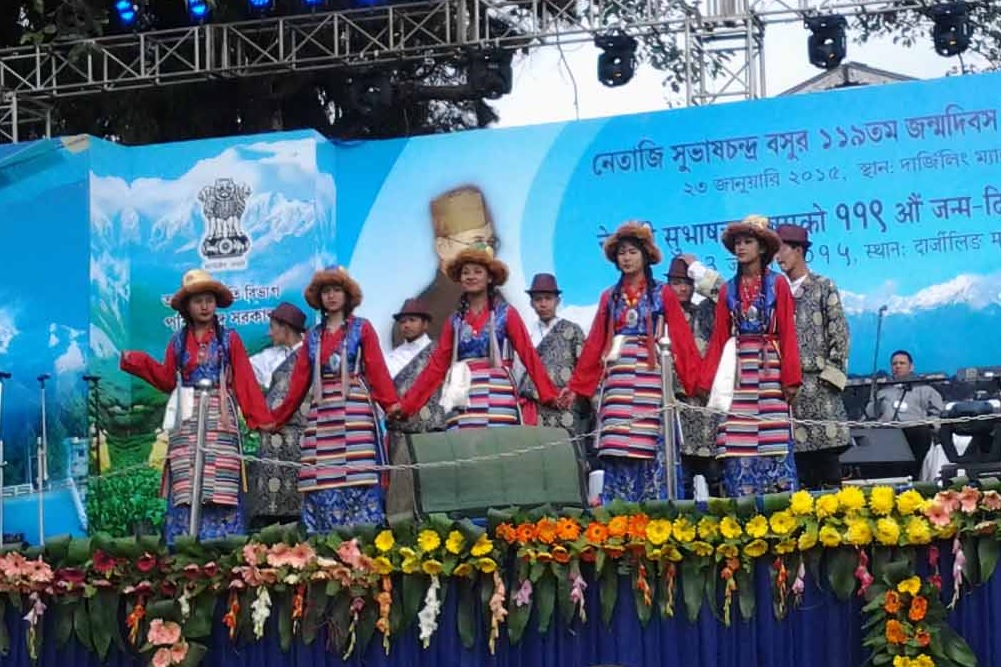
Khambu Rai and Limbu Development Board will be soon announced by Mamata Banerjee who is in a visit to Darjeeling. She is likely to announce these development boards on Netaji Subhas Chandra Bose’s birth anniversary celebration event on 23rd Jan in Chowrasta Darjeeling.

This has come as surprise to many because the Kirat Khambu Rais were fighting for Tribal status. "All India Kirati Khambu Rai Association Strongly condemn the use of our flag for the demand of Development Board. Our organisation ideology do not allow us to accept "Development Board" given by State Government of West Bengal. The use of the Flag without the permission of the organisation is unethical and crime" one of the social media post read.

"I have received several requests for setting up of development boards for various communities, among them, Khambu Rai and Limbu Board will be formed, meanwhile, we will consider for other communities too", Chief Minister Mamata Banerjee said at the concluding ceremony of Himal Terai Sports Festival 2016 held at North Point today.

She also gave away prizes at the sports festival, which was jointly organised by Siliguri Police Commisionerate, West Bengal Sports Department and Darjeeling Police.

‘I will continue to work for you always. I don't pay attention to hate-mongers. I just do my developmental work,’ she said.
‘We are providing Rs 1 lakh each to the Sherpas for their development. We have provided a grant of Rs 131 crore for uplift of the Hills communities,’ Mamata Banerjee said.

‘We are providing sports equipment and jerseys to the sports-persons who are taking part in these events. All the clubs have been granted Rs 25,000,’ she added.

She will be present during the official celebration to mark Netaji Subhas Chandra Bose’s birth anniversary at Chowrasta tomorrow.

Source The Darjeeling Times

 
Copyright © Indian Gorkhas. Designed by Darjeeling Web Solutions