Showing posts with label Dr. Mahendra P Lama. Show all posts

Prof. Mahendra P Lama gets clean chit on sexual harassment case

8:53 PM
JNU sexual harassment case: Panel clears professors, warns complainants

The first complaint relates to an alleged incident in 2013, and the second to an incident last year — the complaints in both the cases were registered in January this year. The probe report, along with the ICC’s recommendations, in the first case was submitted on June 29, and in the second case on July 25.


Written by Aranya Shankar , Shradha Chettri
When contacted by The Indian Express, the ICC’s presiding officer, Vibha Tandon, declined comment. Kharat did not respond to requests seeking comment. The complainants could not be reached for comment.

The internal regulator of Jawaharlal Nehru University (JNU) has cleared two professors named together in two different complaints of sexual harassment — and instead, issued identical warnings to the complainants for “advertising” the issue.

In separate recommendations following probes in both the cases, JNU’s Internal Complaints Committee (ICC) concluded that “no case of sexual harassment” could be made out against Mahendra P Lama and Rajesh Kharat. Lama is a professor at the Centre for South Asian Studies, where Kharat was former chairperson. However, both sets of recommendations contain the same warning in identical paragraphs.

“It was observed during the proceedings that the complainant herself was advertising about her complaint on her Facebook and through other electronic media and informed the public at large. Hence, the complainant should be issued a warning to not indulge in such act in future because this kind of act by any of the complainants, defendants and witnesses damages the inquiry procedure and the affected parties. This kind of a public propaganda also damages the image of the institution,” it reads.

When contacted by The Indian Express, the ICC’s presiding officer, Vibha Tandon, declined comment. Kharat did not respond to requests seeking comment. The complainants could not be reached for comment.

Speaking to The Indian Express, Lama said: “It was a fake and frivolous case lodged by non-performing students in collaboration with non-performing teachers.”

The first complaint relates to an alleged incident in 2013, and the second to an incident last year — the complaints in both the cases were registered in January this year. The probe report, along with the ICC’s recommendations, in the first case was submitted on June 29, and in the second case on July 25.

In the 2013 complaint, the ICC concluded that “no case of sexual harassment is made out against Lama and Kharat”. In the 2017 complaint, too, the ICC found “no case of sexual harassment”.
In the second case, however, the ICC noted that there was an “administrative lapse” on the part of Lama for denying the complainant a No Objection Certificate (NOC) for changing the supervisor. It noted a similar “lapse” on the part of Kharat for not discussing the complainant’s application for a change of supervisor in the faculty meeting.

In the 2013 complaint, the ICC concluded: “Professor Mahendra P Lama was a strict teacher who wanted his students to work hard and perform up to mark, which cannot be termed and/or understood as sexual harassment at all. The complainant could not complete her thesis on time and also it is clear from the deposition of the complainant that on the basis of some rumour she developed “Lama phobia”, which triggered the present complaint. It is also clear (Lama) gave NOC to the complainant without delay for the change of supervisor.”

On the same complaint, the ICC observed that “Kharat did not perform his duty of maintaining the records and files of the PhD students properly. But this act of Kharat cannot be termed as sexual harassment in terms of the Act”.

In the 2017 complaint, ICC recommended that Lama and Kharat be “censured”. Lama was censured for “creating uncertainty by not giving NOC to complainant as well as directing (the) complainant to de-register against her will”.

Via Indian Express

म माथी लागेको दुवै केस फेक हो:- डा•महेन्द्र पी•लामा

12:03 PM

बिगत केही दिन अघि गोर्खाली गौरव डा•महेन्द्र पी•लामा माथि यौन उत्पीडन अनि मानसिक यातना जस्तो गम्भीर आरोप लागेपछि सम्पुर्ण गोर्खाली समाज स्तब्ध साथै दुःखित बनेको छ।

यहि सिलसिलामा गोर्खाल्याण्ड 24x7ले डा• एम•पी लामा संग फोन मार्फत सम्पर्क गर्यो। फोन अन्तर्वार्तामा उनले आफुमाथी लागेको सम्पुर्ण आरोप निराधार अनि झुटो हो भन्दै सरासर खारेज गरेका छन्।फोन अन्तर्वार्तामा उनले भने,' यो एकदमै साधारण केस हो।स्टुडेन्टहरुले पिएचडीको निम्ति चार बर्ष भरिमा च्यापटर बुझाउने पर्ने हुन्छ। त्यसलाई प्रोफेसरहरुले जाच्ने गर्दछ।अनि म माथी आरोप लगाउने दुई छात्राहरुले अहिलेसम्म एउटै पनि च्याप्टर बुझाएकी छैनन।जुलाई 2018 साल भरिमा थेसिस बुझाउन पर्ने हुन्छ।मैले ती दुई छात्राहरुलाई भनेको थिए।तिमी दुईले थेसिसको च्यापटर चाहिँ बुझाउ यदि बुझाउन सकेनौ भने युनिभर्सिटीमा दी रेजिस्टर नियम अनुसार जब च्यापटर तयार हुन्छ तब बुझाउ भन्ने सुझाव दिएको थिए। दी रेजिस्टर नियम अनुसार युनिभर्सिटीको होस्टेल छोडन पर्छ।तर यो बिध्यार्थीहरुले च्यापटर पनि न बुझाउने नियम पनि पालन नगर्ने हुँदा मैले तिमिहरुले या त दी रेजिस्टर नियम पालन गर अथवा च्यापटर बुझाउ भन्दा युनिभर्सिटीको इन्टरनल कम्प्लेन कमिटीमा मेन्टल ह्यारेस्मेन्ट(मानसिक यातना) को केस दर्जा गर्यो।मैले ICC(Internal Complain Committee) लाई दुई छात्राहरुको सम्पुर्ण ब्यवहार अनि वास्तविक कुरा उल्लेख गर्दै पत्र लेखे।अहिले आएर हामीले केस हार्ने रहेछौं भनेर आभास पाए पछी बाहिर निस्केर मेरो बदनाम गर्ने कोशिस चलीरहेको छ।यो एक सोची सम्झेर गरिएको साजिस हो।होस्टेल बाहिर निस्केपछि यिनिहरुले राजनैतिक दलको बिध्यार्थी संगठनको समर्थनमा अहिले आधारहीन आरोप लगाइरहेका छन्।अहिले युनिभर्सिटीको आन्तरिक मामिलाको कारणले गर्दा १५ दिन देखि युनिभर्सिटी बन्द छ।

के यसलाई एक राजनैतिक षड्यन्त्रको रुपमा मान्नु हुन्छ भन्ने गोर्खाल्याण्ड 24x7 को प्रश्नको उत्तर दिदै डा• लामाले भने,' हुन सक्छ, म यसलाई नकार्न सक्दिन तर त्यो भन्दा पनि मुख्य कुरा के हो भने मेरो सबैभन्दा कमजोरी के भयो भन्दा अरुले नपाउने जम्मै कुरोहरु मैले पाए।भर्खरै म चाइनामा एक हाइ एन्ड एक्सपर्टको रुपमा गए।जुन एकदमै दुर्लभ पद हो।त्यसमा धेरैले म संग आहृस गरेका छन।साथै म प्रधानमन्त्रीको भारत सरकारको एमिनेन्ट पर्सन्स ग्रुपमा पनि परे।जम्मै भारत अनि नेपाल सम्बन्ध मैले नै सम्हाल्ने दायित्व छ।त्यसमा सबैको आँखा जलेको छ।तर यसमा म के गर्न सक्छु केही गर्न सक्दिन भन्दै लामाले आफ्नो कुरा राखे।

र माथी लागेको सम्पुर्ण आरोपहरु झुटो हो।तपाईहरु कोही पनि सुर्ताउन पर्दैन।म जे भन्दैछु साँचो भनी रहेको छु।अनि ICC(Internal Complain committe) मा केस दर्ता भएको छ।त्यहाँ मैले बाहिर गएर केही भन्दिन भनेर Oath Of Confidentiality(गोपनियताको  सपथ)लिएको कारणले गर्दा मात्रै बाहिर निस्केर भन्न न सकेको हु नत्र भने मैले प्रेसवार्ता ढाकी अस्तिनै सबै खुलस्त पार्ने थिए भन्दै डा•महेन्द्र पी लामाले आफ्नो कुराहरु राखे।सरलाई त पद बाटनै हटाउन पर्छ भन्ने कुराहरु उठदैछ नि भन्ने प्रश्नको जवाफमा डा• लामाले हास्दै भने,' त्यो त जे भन्दा पनि हुन्छ।फेसबुकमा त जे भन्दा पनि हुन्छ जे लेखे पनि हुन्छ।अब मैले तपाईलाई ब्यक्तिगत रुपले नचिने पनि गोर्खाल्याण्ड 24x7को चिफ एडिटर राई भाई त यस्तो पो हो भनेर आरोप लगाई लेख्दा हुन्छ नि हैन? त्यसर्थ यस्ता कुराहरुलाई भाव दिन पनि हुँदैन।

सरलाई 2019 सालको चुनाव लडन पर्छ भन्ने तपाईंँको समर्थकहरुलाई के संदेश दिन चाहनु हुन्छ भन्ने प्रश्नको उत्तरमा म अहिले चुनावको बारेमा केहि सोचेको छुइन। त्यो समयले बताउने छ डा• लामाले गम्भीर संग उत्तर दिए।अनि कोही पनि डराउनु अनि आत्तिनु पर्ने छैन कारण म माथी लागेको सम्पुर्ण आरोपहरु झुटो अनि निराधार हो।

Source गोर्खाल्याण्ड 24x7

JNU students protest against Mahendra P Lama leveling allegations of sexual harassment

6:47 AM

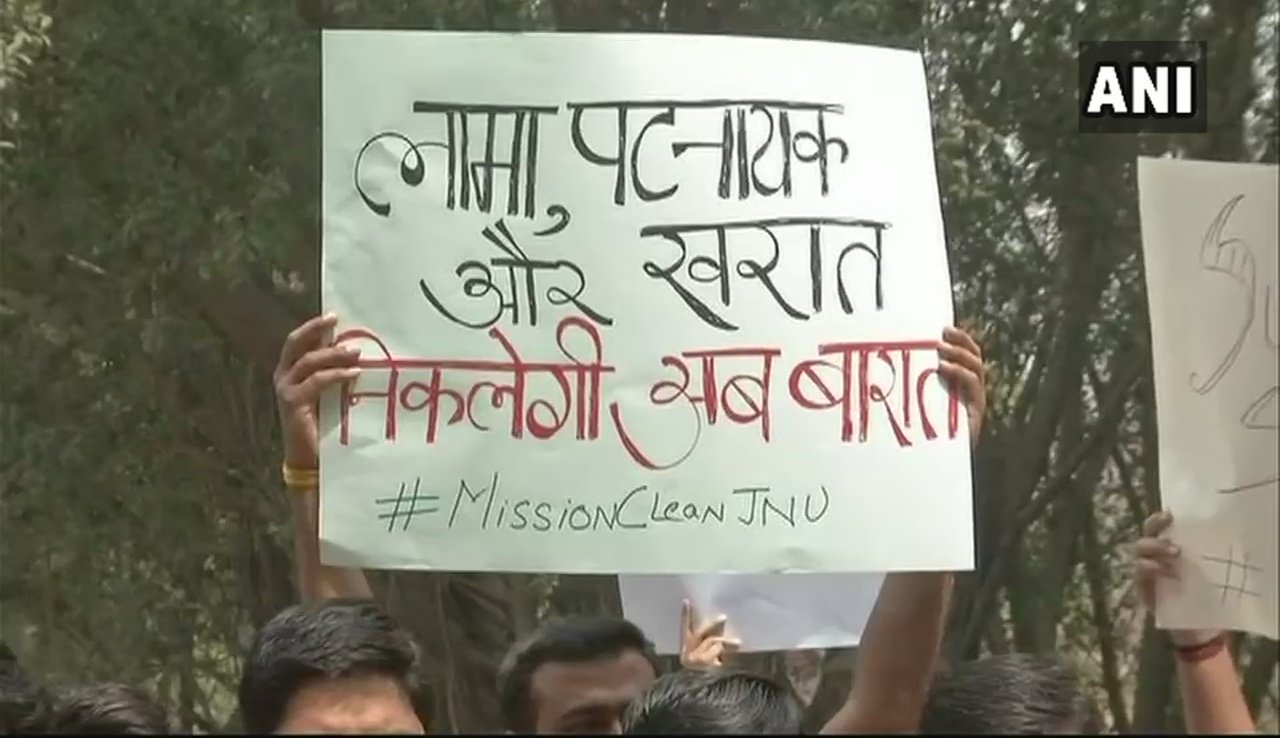
JNU students protest against 2 other professors alleging sexual harassment

ANI | New Delhi Students of Jawaharlal Nehru University (JNU) staged a protest against professors Mahendra P Lama, and Rajesh Kharat leveling allegations of sexual harassment against them. The students demanded that they should be arrested.

Recently, JNU's another professor Atul Johri was arrested in a sexual harassment case and was later granted bail.
JNU students protest against professors Mahendra P Lama leveling allegations of sexual harassment

A student of JNU filed a case against Lama and Kharat, who work in the Centre of South Asian Studies of JNU. The professors allegedly took the student to China for work and tried to harass her sexually.

She asked the Internal Complaint Committee of JNU to suspend the professor. However, no step been taken against him as yet.

Both the professors were arrested by the Police on the basis of the complaint registered by the victim but were later granted bail. The varsity authority has not taken an action against them since then.

Via B S

Dr. Mahendra P Lama in Myanmar Energy Forum

10:00 PM
Prof Mahendra P Lama of Jawaharlal Nehru University, New Delhi was invited from India to make a special presentation on how cross border energy exchanges could be done with Myanmar’s South Asian neighbours particularly the immediate North East region of India

In order to implement the promises and issues related to the energy security in Myanmar mentioned in the election manifestoes of the first democratically elected Government led by the National League for Democracy, the Myanmar Energy Forum Meeting was organised by the famous Parami Energy at Nay Pyi Taw the new capital of Myanmar. Myanmar formerly Burma has now country’s first civilian President Htin Kyaw in more than 50 years. The military rule was imposed in Myanmar in 1962 and ruled the country till very recently.

The National League for Democracy is actually led by its President and Nobel Laureate Aung San Suu Kyi who won commanding majorities in both houses of parliament in the last November 2015 election. Suu Kyi is the youngest daughter of the Father of the Modern Burma Aung San. However, the valiant fighter for democracy who was jailed and remained under house arrest for almost 21 years could not become the President of Myanmar this time also as the constitution debars anyone with a foreign spouse or children to become the President. It may be noted that Aung San Suu ki is married to late Prof Michael Aris from England and has two sons. Suu ki however, has taken over the coveted portfolios of Foreign Affairs and Ministry of President’s Office.
Dr. Mahendra P Lama in Myanmar Energy Forum
In photo from left : Shri Ken Tun, CEO of Parami Energy of Myanmar, Prof Mahendra P Lama
and Shri Gautam Mukhopadhyay, Indian Ambassador to Myanmar

A large number of top energy specialists from all over the world gathered in this Energy Forum Meeting led by Myanmar’s top energy specialist Ken Tun. This Forum specially met to draw a policy document for energy security in Myanmar. Prof Mahendra P Lama of Jawaharlal Nehru University, New Delhi was invited from India to make a special presentation on how cross border energy exchanges could be done with Myanmar’s South Asian neighbours particularly the immediate North East region of India. Indian Ambassador to Myanmar Shri Gautam Mukhopadhyay also participated in the Forum meeting held in the very beautiful Horizon Lake View Resort.

The Forum finally produced a policy document for the Government of Myanmar which aims including many other issues to reach electricity to every nook and corner of Myanmar by 2030 and also scientifically harness its huge gas and water resources.


[You can reach Prof. Mahendra P Lama at: Mob 9818686637]

Via DarjeelingTimes


देशमा हार्‌यो, कालिम्पोङमा जित्यो - महेन्द्र पी लामा

9:27 AM
- महेन्द्र पी लामा

हामी छुट्टै राज्यका निम्ति संघर्षरत सबैको लागि गत केही सातामा विभिन्न अखबारहरूमा निस्केका चार–पाँचवटा समाचार अति नै चिन्ताजनक छन् । प्रथमतः १३ मेको टाइम्स अफ इन्डियामा दार्जिलिङका सांसदलाई संसद्को एक प्रमुख पब्लिक एकाउन्टस् कमिटीबाट हटाइएको खबर छापिएको छ । यस कमिटीबाट दार्जिलिङको सांसदलाई आफ्नै पार्टी भारतीय जनता पार्टीले नै हटाएको हो । यसअघि दार्जिलिङको सांसदलाई बीजेपीको उत्तरपूर्वी क्षेत्रहरूको देखरेख गर्न पदबाट पनि हटाइएको थियो ।

त्यसअघि दार्जिलिङका सांसदको नेतृत्वमा बनिएको जमिन उपलब्धि अधिग्रहण विषय संसद्को संयुक्त समितिको अवधि बढाइएपछि पनि कुनै ठोस रिपोर्ट नै प्रस्तुत गर्नु नसक्दा एनडीए सरकारले जमिन अधिग्रहण जस्तो महत्त्वपूर्ण मामलामा हार मात्रै नमानेर संसद्मा यसको परिचर्चा नै बन्द गर्‌यो । प्रश्नै–प्रश्न उठ्छ यहाँ ? एकपटक गोजुमुमोले ‘हामीले पठाएको सांसद केन्द्रीय मन्त्री' हुन्छ भन्थ्यो अहिले ऊ सांसदलाई नै आफ्नै पार्टीले यस्तो हालत बनाएपछि, दार्जिलिङमा आएर २८ दिनमै भोट जितेर गएको सांसदले संसद्मा छुट्टै राज्यको नामसमेत पनि उच्चारण गर्न सक्ला ? अब तीन वर्ष छ ।

दार्जिलिङका मानिसहरूले भूमिपुत्र र जातिको चिनारीसमेतलाई गलहत्याएर पठाएको सांसदले खोइ केन्द्रीय विश्वविद्यालय ल्याएको स्मार्ट सिटी खोइ ? दार्जिलिङलाई उत्तरपूर्वी क्षेत्रको काउन्सिलमा हालेको खोइ ? चिया कमानमा मानिसहरू बेसहारा भई भोकभोकै मर्दा पनि सांसद कहाँ छन्, सांसदलाई दार्जिलिङ ल्याएर जिताउने पार्टी कहाँ छन् ? पञ्चायत व्यवस्था के भो ?
महेन्द्र पी लामा
महेन्द्र पी लामा
दोस्रो खबर, १३ मईको टाइम्स अफ इन्डियामा नै यत्रो ठूलो छापिएको थियो । बिहारको समस्तीपुरमा राजेन्द्रप्रसाद कृषकीय विश्वविद्यालय स्थापना गर्ने बिललाई लोकसभा र राज्य सभामा एकै दिनमा पारित मात्रै नगरिएर त्यही दिन राष्ट्रपतिले पनि स्वीकृति दिए । संसदीय इतिहासमा यो एउटा नौलो घटना थियो । अर्थात् सरकारले चाहेको खण्डमा विश्वविद्यालयको बिल एकै दिनमा पनि पारित गरिन सकिनेरहेछ हाम्रो सांसदले चाहिँ के गर्दैछ ? गोजामुमोले तीन–तीनवटा बजेटमा विश्वविद्यालयको घोषणा गरिनेछ भनी चारैपट्टि ढोल पिट्यो । डीपीआर बनाउनलाई लाखौँ रुपैयाँ खर्च गर्‌यो ।

मङपुमा आफ्नो हक अधिकार नहुँदानहुँदै पनि विश्वविद्यालयको निम्ति जमिन देखाइ टोप्लयो । तर विश्वविद्यालयको नमोनिशान छैन । विश्वविद्यालयलाई केन्द्रले दिँदा न डीपीआर चाहिन्छ, न बजेटमा घोषणा गर्नुपर्छ, न पहिल्यैबाट जमिन देखाउनुपर्छ । हामीले बारम्बार यी सत्य कुरा भन्दै आएका छौँ । केन्द्रीय विश्वविद्यालयको निम्ति संसद्मा सरकारले बिल मात्रै ल्याउनुपर्छ, अहिले बिहारको कृषि विश्वविद्यालय झैँ । सो बिल सरकारले ल्याउनुपर्छ, सांसदले ल्याउनुपर्छ ।

खोइ हाम्रो सांसद, खोइ हाम्रो बिल ? एउटा केन्द्रीय विश्वविद्यालयसम्म त ल्याउन नसक्ने सरकार सांसद र गोजुमुमोले छुट्टै राज्यलाई त ‘आकाशको फल आँखा तरी मर' नै बनाइदियो । भोट दिने जनता किन चुप छ ? एक दिन खाएर पाँच वर्ष भोकै बस्नु नै रुचाएको हो कि कुन्नि कहाँबाट हुत्तिएर आएको मान्छेलाई सांसद बनाउने हाम्रो जनताले ?

तेस्रो, रहेका सबै गोर्खा जातिका जातिलाई जानजातिको सूचीमा गाभ्ने जमर्को चल्दैछ । दोहोरी र फेद न टुंगैबिना ‘हाई लेभल' कमिटी केन्द्र सरकारले बनायो भनेर फेरि नाच्यो गोजुमुमोका भाइ भतिजाहरू । एकपटक मुखैमा, आँखाको अगाडि नै र गोर्खे छातीकै सामुने ‘बंग भंग हो बेना' भन्दा पनि यसरी नै अर्थनव्यर्थमा नाचेका थिए यिनीहरू र नाचेका नाचेकै छन् आज पनि । चुनावको अगाडि एनडीए सरकारले एउटा ‘संयुक्त सचिव' स्तरको कमिटी गोर्खाका जातलाई अनुसूचित जनजातिको सूचीमा हाल्नलाई विचार–विमर्शको निम्ति गठन गर्‌यो । यसलाई गोर्खाल्यान्डभन्दा ठूलो उपलब्धि हो भन्नेहरू पनि छन् ।

नोकरशाहीको सबैभन्दा तलका अधिकारीको नेतृत्वमा कमिटी गठन गर्दा मान्छे किन रमाएको ? सचिवस्तरमा, राजनीतिक स्तरमा वा विशेषज्ञ र न्यायाधीशको स्तरमा यो कमिटी बनिनुपर्ने थियो । यो केको ‘उच्चस्तरीय' ? पुङ न पुच्छरमा किन रमाउनु ? यो कमिटीको टर्मस् अफ रेफरेन्स खोइ ? जनजातिको सूचीमा हाल्न पाँचवटा खुड्किला चढ्नुपर्छ । तेस्रो खुड्किलो पुगिसकेको मागलाई फेरि यो कमिटी बनाएर प्रथम खुड्किलोमा किन झार्‌यो ? हिजोअस्ति जनजातिको माग प्रधानमन्त्रीको टेबुलमा छ र प्रधानमन्त्री विदेशबाट फर्किनासाथ पास हुन्छ भन्नेहरू कहाँ छन् आज ?

केही गर्नुपर्दैन । आसामका ६ जाति कोच–राजवंशी, मुतिया, ताई अहोम, मोरान र मुटोकलाई एनडीएका प्रधानमन्त्रीले लोकसभा चुनाव जितेको खण्डमा ६ महिनाभित्र नै जनजातिको सूचीमा हाल्छु भनेर आश्वासन दिएको दुई वर्ष भयो । भर्खरै भएको विधानसभाको चुनावअघि नै हाल्छौँ भनेर सात सदस्यीय कमिटी पनि बनायो, तर केही भएन । दार्जिलिङको सांसद र गोजमुमोले गोर्खाल्यान्ड झैँ यसलाई २०१७ को जीटीएको चुनाव र २०१५ को लोसभा चुनावको मुद्दा बनाउने नै छ । कारण यी दुवैमा यी दुई मुद्दाहरूलाई पार लगाउने न क्षमता छ, न लगनशीलता, न त इमानदारीता नै छ ।-

चौथो गत १५ मईमा टेलिग्राफ खबर कागजमा हामीले भन्दै आएको कुरोलाई नागाल्यान्ड सरकारले लैजान सुरु गरेको खबर छापियो । जापान सरकारले नागाल्यान्डबाट १५ हजार प्रशिक्षित नर्सहरूलाई जापान लगेर त्यहाँका बूढापाकाहरूका हेरचाह गर्नमा रोजगारका निम्ति निम्तो दिने । जापान र विश्वका विकसित राष्ट्रहरू अमेरिका, जर्मनी, फ्रान्स, इङल्यान्ड, क्यानडा आदिमा बूढापाकाहरूको संख्या अति बढी मात्रामा भएकाले चारैतिरबाट नर्सहरू लगेर जाँदैछन् । जापानमा भने बूढापाकाले हजारौँ रुपैयाँ तलब दिएर फिलिपिन्सबाट नर्सहरू ल्याउँछन् । कोरिया–चीन आदि राष्ट्रबाट ऐतिहासिक कारणले जापान नर्सहरू रुचाउँदैन ।

हामीले दार्जिलिङको कुना–कुनामा लोकसभा चुनावको समय दार्जिलिङबाट हजारौँ नर्सहरू जापान र अन्य राष्ट्रहरूमा पठाउने प्रस्तावना र कार्यक्रम अघि ल्याएका थियौँ । हामीले भनेका थियौँ– नर्स ट्रेनिङ स्कुल र केन्द्रहरूमा हाम्रा चेलीबेटीलाई भर्ना गरी, विदेशी भाषाजस्तै जापानिज सिकाएर, यी विदेशी सरकारसँग सम्झौता गरी, हाम्रै दार्जिलिङ र सिक्किम क्षेत्रका हजारौँको संख्यामा विदेश पठाउन प्रबन्ध मिलाउँछौँ भनेर । चुनाव हारेपछि पनि धेरै ठाउँहरूमा यस्तो प्रस्ताव राख्यौँ । म आफैँ जापानका विश्वविद्यालयहरूमा पढाउँदा र त्यहाँका उच्च अधिकारीहरूसँग कुराकानी गर्दा यसमा सहमति सबैले जनाउँथे । संस्कृति, रूप, रङ, लवाइखुवाइ आदिमा हाम्रा ठिटीहरू जापानसँग घतलाग्दो प्रकारले मिल्छन् । तर कसैले यो कुरो अघि बढाएन ।

गत ६ महिनामा उत्तरपूर्वी क्षेत्रका उच्च अधिकारी र राजनीतिक नेताहरूकहाँ विभिन्न कार्यक्रममा मैले यो प्रस्ताव राखेँ । आश्चर्यजनक कुरो, भारत सरकारका उद्योग वाणिज्य मन्त्रालयका अधिकारीहरू र उत्तरपूर्वी दुई राज्यका मुख्यमन्त्रीहरूले यो सुझावलाई टिपेर आज कार्यान्वयन पनि गरेकाले नै, नागा ठिटीहरू र खसिया ठिटीहरू नर्स भएर जापान जाने तरखरमा छन् । जीटीएले यस्तो कुरो सोच्न पनि सक्तैन ? सांसदलाई अत्तोपत्तो छैन हाम्रा ठिटीहरू र उनीहरूका परिवारले झेलेका पिरमर्काबारे । अनि नै दुःखलाग्दो कुरो हो, फोहोरमैला, दुःख–पीडा र अन्धकार भविष्यमा लादिएर पनि जनता ब्युँझिँदैनन् । यो ज्वालामुखी कहिले फुट्ने ? भित्रभित्रै लामाहरू खरानी भएपछि फुटेर पनि ज्वाला ननिस्केला एक दिन ।

पाँचौँ सिक्किमको एउटा नेताले सिक्किमे नेपाली हो, अरू गोर्खा हो, जो नेपालबाट आएर यहाँ बसोवास गरेका हुन् भन्ने एउटा खबर २२ मेमा छापिएपछि सर्वत्र भयानक हिसाबले भत्र्सना गरियो । गोर्खाहरूचाहिँ भारतीय सेनामा भर्ना भएर आएपछि देशको विभिन्न कुनामा बसोवास सुरु गरे ।

यिनी नेताले यस्तो खतरनाक भाषण दिएकोमा आफैँ लज्जित हुनुपर्ने हो । आफ्नो ज्ञानको सीमिततामाथि आफैँ घोत्लिनुपर्ने हो । तर लज्जित हुने नेता होइनन् यिनी किनकि यिनले आफ्नो नेतागिरीको दौरान भारतीय गोर्खा जातिको विरोधमा अनगिन्ती काम गरेका छन् । समयले यी सब जातिविरोधी कामलाई उजागर मात्रै नगरेर, भावी पुस्ताले धिक्कार्ने छन् ।

पाँचवटा प्रश्न राखौँ है त ? गोर्खा जातिलाई जातजातमा सिक्किम टुक्रा कसले पार्‌यो र पछि त्यही हावा सिक्किमदेखि बाहिर कसले बहायो ? के पश्चिम बंगालका मुख्यमन्त्रीले जातिगत बोर्ड बनाई गोर्खाहरूको गढ दार्जिलिङमा वीभत्स वातावरण जन्माउनुमा सिक्किमको हावाले प्रभाव पारेन होला ? भारतीय गोर्खाहरूका चिनारीको माग गोर्खाल्यान्डको एउटा प्रमुख हतियार दार्जिलिङ सिक्किमको राष्ट्रिय माग बन्द गर्ने प्रथालाई भारतको सर्वोच्च न्यायालयमा लडेको मुद्दामा करोडौँ खर्च गरी यसलाई गैरकानुनी घोषणा गर्नु कसले लगायो र पछि मागको यो दाहिने हात नै काटेपछि सहानुभूति देखाउँदै, सिक्किम विधान सभामा पुङ न पुच्छरको गोर्खाल्यान्डलाई सघाउने प्रस्ताव किन पास गर्‌यो ? त्यहाँको नेता भएको २२ वर्षमा भारत सरकार र कुनै उच्च आयोगलाई भारतीय गोर्खाहरूका चिनारी अस्तित्व र मागबारे कुन एउटा ठोस ज्ञापन दिएको छ, देखाउन सक्छ ?

सन् २००५ मा इन्डिया टुडेले गरेको दिल्लीको मुख्यमन्त्रीहरूको कन्क्लेभमा यिनी नेताले गोर्खाल्यान्डमाथि बोल्न किन मानेनन् ? सिक्किमबाट पठाएका गोर्खा नेपाली भाषा सांसदहरूले यिनी नेताले छत्रछायामा, छुट्टै राज्य त के भारतीय गोर्खाहरूले भोगेका पिरमर्का उत्पीडनमा किन प्रश्न उठाउँदैनन् र उठाएनन् ? फेरि त्यही सिक्किमबाटै गएकी सांसद सदस्यले कसरी नेपाली भाषा मान्यताको लागि लडिन् र तिनताकका नेपाली भाषी मुख्यमन्त्रीले कसरी भारतीय नेपाली राष्ट्रिय परिसंघ स्थापना गरेर गोर्खाहरूको निम्ति त्यतिविघ्न कार्यहरू गरे ? सन् २००३–२०१६ सम्म पनि भारतीय गोर्खा जातिमा रहेका तामाङ र लिम्बू जातका अनुसूचित जनजातिका सिक्किम विधानसभामा किन सिट आरक्षणको लागि यिनले लडेन र आज चारैतिर विरोध सुरु भएपछि किन लड्ने चासो देखाउँदैछ ? २००८ मा सिक्किम आएको डिलिमेटेसन कमिसनलाई यिनी नेताले के भनेर लट्पटाए ? अति नै भयानक र चिन्ताजनक यी कार्यले भारतीय गोर्खाहरूलाई सधैँ झक्झकाइरहनेछ ।

कालिम्पोङमा गोजुमुमोको जित भयो तर यो पार्टी र यसको मुद्दा देशमा धेरैपटक हार्‌यो । ... जित्ने सम्भावना नै छैन ।

तर फेरि जित्नु भनेको लड्डु बाँडेर कन्ट्रयाक्ट बाँडेर, सरकारले जनतालाई दिएको विकासको कोस आफू, भाइभतिजा, दलाल, संगिनीबीच बाँडचुँड गर्नु मात्रै होइन । जित्नु भनेको जाति, क्षेत्र विकासको लागि केही पाउनु हो, छुट्टै राज्य ल्याउनु हो । टक्कर दिनु हो । भूतको छाया भएर टक्कर दिन सक्तैन । विधान सभा र संसद्मा छायाको खेल हुँदैन, पैसाले जिताएको सदस्यको मोल हुँदैन । कहीँ न कहीँ, केही न केही कुरोमा झुक्याएर पठाएको सदस्यले आफ्नो रङ देखाइदिइहाल्छ । र नै देशमा जित्नुपर्छ, कालिम्पोङमा होइन । समुद्रमा पौडी खेल्नु पर्छ, खोल्सामा होइन ।


Via: Annapurna Post

Reimagining encounters with Hari Prasad ‘Gorkha’ Rai - Mahendra P. Lama

5:09 PM

Writes - MAHENDRA P LAMA 

May 7, 2016- Though I always deeply enjoyed reading literary works of Hari Prasad ‘Gorkha’ Rai and heard so much about him from my revered father RP Lama and his friends at Su-Dha-Pa (Surya Bikram-Dharnidhar-Parasmani) hall of Nepali Sahitya Sammelan in Darjeeling, I had the opportunity to interact with ‘Gorkha’ Rai-jyu just twice—once in New Delhi and the next time in Gangtok. However, both these encounters remained a rare occasion for me. I was struck by his simplicity and his inclusive views on life outside the geographies of Nepali-speaking communities like Sikkim and Darjeeling. In the course of our interaction, my major question was: how did he find life among the Nagas in Nagaland and Ahoms in Assam, and how could he produce so many literary works in not only Nepali literature but also in Assamese and other languages? He was candid and forthright when he said that Gorkhas, by nature, are a very friendly and jovial community and could go along with any community, particularly in a democratic set up. He further narrated how the Nagas and Assamese intermingled with the Gorkhas and extended social and political support for their upliftment. There are moments of apprehensions and misunderstanding but are largely overshadowed by the larger issues of peaceful coexistence and Indianness and more critically social cohesiveness. This was typical of ‘Gorkha’ Rai-jyu, a man who carried a halo of intellectualism in his ever-glowing face. His views are not different than what one hears from other Nepali literary figures in the North East region of India. They all nurtured a feeling of ‘regional oneness’, amidst huge diversity in their approaches to their day-to-day lives.
 Hari Prasad ‘Gorkha’ Rai
 Hari Prasad ‘Gorkha’ Rai
‘Gorkha’ Rai-jyu stands among many distinguished writers of his generation, like Acchha Rai Rasik, Lain Singh Bandel, Siva Kumar Rai, Indra Sundas, Rup Narayan Sinha, and others. Oh! How I loved reciting his famous poem Kamp Uthyo in my college and university days. They always ended with loud chants of ‘once more’. ‘Once more’ not because of the style of recitation but the contents of the poem and high decibels of ‘encore’, not because of the enthralment this recitation generated but for the bourgeoning fascinations of the Gorkha youths towards their own literary traditions. Yes, he used attractively engaging common words and expressions. Many of our friends would actually cry and howl whenever there was an announcement of the arrival of Kamp Uthyo.  I myself used to get goose bumps before I stepped onto the stage and held the microphone.

Another poem I frequently recited in public was Bairagi Kainla’s Mateko Mancheko Bhashan:  Madhyarat Pachiko Sadaksita. We simply photocopied these poems in an old manual photocopy machine at a pretty high cost and distributed it. These recitations still echo in the lawns of the Fraser Hall of St Joseph’s College and North Bengal University in Darjeeling and the Mavalankar Hall of New Delhi. That was the late 1970s and 1980s when Indian Gorkhas across the country were struggling and collectively fighting for the recognition of the Nepali language in the 8th Schedule of the Constitution of India; the decades when the Indian identity of the Indian Gorkhas were brought to the political table and negotiated in the name of a separate state of ‘Gorkhaland’ comprising of Darjeeling and adjoining Dooars region of West Bengal.  This was the time, when in the name of ‘foreigners’, a large number of Indian Gorkhas were inhumanly displaced and ousted in several North East States in the name of ‘cleansing their lands’. This was the time when the Indian nation state failed to protect their own hapless but true citizens amidst the parochial cacophony of ‘foreigners go back’.  History will never forget these atrocities and discriminations against the Indian Gorkhas who valiantly fought and immensely contributed in India’s freedom struggle and in the building of modern India. Who will deconstruct the present history and reconstruct the more inclusive history is a question the Indian Gorkhas have been asking. We lost the game as majority of our political leadership who could take up these issues are literally uneducated, both in terms of acquired degrees and knowledge. This is a tragedy among the Indian Gorkhas.

What I like in Kamp Uthyo (literally meaning uprooting of a camp from his anthology of poems Babari published in 1974) is its depiction of a soldier’s life and its uncertainty; more critically the story of separation that underlines the entire narrative, the beautiful elucidation of a soldier’s dilemma who has made friends around the camps with humans, flowers and nature’s ecology.  The soldier has reached Shillong from Darjeeling, and settles down in the military camp. The depiction of Gorkha soldier’s attachment with his roots in Darjeeling and his unparalleled ability to adapt to a new geography and society makes the reading both absorbing and powerfully touching.

Like in the past, the inimitable soldier has to leave Shillong now as they have to camp in some other frontier. By now, he has friends around with their names typical of a hill society, developed some mutual infatuation with a local girl named Sita and strong attachments with the societal practices, community living styles in Shillong. He realises and accepts that there lies uncertainty in his new destination but like a true soldier he is ready to bravely face death. A sense of sacrifice and unenviable attachment to their motherland prevails in him, something with which Gorkhas are born with. He imagines that flowers will bloom in his cemetery and passersby could assume it to be a magnificent garden. This is the way he personifies the life of a soldier who devours his physical being at the frontiers of battlefield—a superb personification where one is born to die but meaningfully like a Gorkha soldier.

Good bye Shanti! Good bye Bire! 
Good bye my friend Dhane! 

Good bye Manu! What do I say to you 
Never will come that day 

Good bye Hari 
Good bye to all of you! 
The symbols of quietness—my dear Sita 
You are like a Goddess 
Shall always wrap and unfold you into my own story 
My rude sister Maily 
Shall meet you during my dejected moments. 

do say my goodbye to that sister 
who accompanied me to Suna-Kurung falls 
Please count these goodies to the one 
who quietly peeped me from her window panes 

Oh now the bugle is sounding 
I have to go for a ‘fall in’ 
Where a Gorkha has not reached? 
everywhere whether ‘fall in’ or in no ‘fall in’ 

Against the grumping sound of boots 
Six tonner vehicle moved with noise 
We are moving to the next camp 
It’s just a recollection once again 
So many Mannus were killed in Marmma 
Many Danus were left behind in Burma 
Camp is uprooted once again 
I am on a move as a soldier 
Donot know what awaits us 
there in the unknowns, 
May be I will remain dead flat 
in the battlefield not seen now 
And there will blossom bouquet of flowers 
On the cemetery I will remain in 
Some stranger walking past could think it to be a garden 
My bare bones and other remains 
would then quietly narrate my story 
Chanting the gregarious call of Aayo Gorkhali 
(here arrive the Brave Gorkhas) 
I shall reach far beyond 
Good bye forever ! Good bye and again good bye 
My dear Sita 
Forever be near me and nearer me.

His short stories are absorbing and gives us fresh waves of joys and shocks of acute pain and of course, penetrating anguish. He is a deadly connoisseur at creating something that is beautiful. His short story Banani Banki Sundari (beauty from Banani forest, published in Bharati, Kalimpong, 1973) and reviewed in the prestigious Masterpieces of Indian Literature  (National Book Trust, New Delhi, 1997) by this author refreshed memories about the rebellion in Mizoram. In this complex and chilling story, Lainsemi lived with her mother in Mizoram hills and had developed intense love for Captain Raj who was posted there to supervise the operations against the rebels. These rebels once forcedly took away Lainsemi from her home, took her to their camp and invaded her morals from her soul and sent her back bereft of physical value. On her way back, she meets her Captain-lover who was returning from Darjeeling from a short leave. And then she narrates to him all that happened.

‘Gorkha’ Rai-jyu will ever be remembered for many generation to come. Saraswati, one of his three daughters, took the cudgels of bringing together his memories and contributions in a volume. What is of critical importance for his family and friends is to recollect and re-document what he left for posterity as oral history and unpublished manuscripts. Somewhere in the preface of one of his books he wrote:

“I must confess that I have this habit of writing poems and singing them as songs whenever I get the right moment, theme and actors. ... I never took care of these papers which were drafted and corrected from all sides. Many a times I just tore them into several unrecognisable pieces and forgot them for all the time to come.”

Saraswati could revisit his papers and bring them to public purview as societal intellectual property. This phenomenon is universal among the Gorkhas all over. The ‘oral history’ programme, the ‘winter sojourn’ project and the ‘book discussion’ event and of course ‘Ethnicity and Biodiversity Museum’ which we initiated in the very first five years (2007-2012) of building Sikkim University, a national university, in Gangtok have been exactly aimed at realising these objectives.

We started documenting our rich but unrecorded intellectual heritage through ‘oral history’ (Maukhik Itihas) programme. Our teachers and students visited villages and rugged terrains looking for the custodians of this knowledge and interviewed them, recorded them and transformed them into documents and unusual sets of knowledge base and intellectual capital. In the past we steadily lost so much in terms of knowledge and wisdom when our parents and grandparents faded into oblivion. No one documented them and we lost the game. Whereas same traditional knowledge base was capitalised by the Chinese, Japanese and companies like Coca Cola to generate huge development resources and extend and ensure human security. Therefore, in order to connect the oral history programme with the societies and communities in and around Sikkim we simply said:

Baje Mare Boju Mareen, 
Duiwata  pustakalaya  lierai  gae 
Aba yesto  huna dinnau hai

Thereby meaning:

Grandfather passed away, 
Grandmother crossed the horizon, 
Along, took away two beautiful libraries, 
We shall not let it happen again

The ‘winter sojourn’ (Hiundo Yatra) project aimed at connecting the University and higher education with the communities. The students and teachers will go to a destination in Sikkim and around to study themes like water, brooms, cardamom, trafficking of women, cultural heritage, health, pastime games, forest, local women vendors, etc, from an inter-disciplinary perspective. This helped our students and teachers to understand and assimilate the issues within the locales of their university and also connecting the village folks and city dwellers with the higher education. This generated adequate researchable local and regional issues from within our geography, natural resources and communities so that we steadily move to ‘globalisation of locals’ (knowledge, culture, traditional medicinal systems, adaptation story of climate change, food, literary heritage, and also disaster management techniques etc) and not what is dominantly happening now the ‘localisation of globals’ (Jeans, Samsung, Apple, Pizza, Hamburger, KFC, Honda and Toyota). ‘Book discussion’ (Pustak Chalphal) event was designed to imbibe reading habits among the younger generation and take them nearer to their roots where language, literature, culture, music, sports and young talents profusely flourished in the past.

And finally in the initiation and building of Ethnicity and Biodiversity Museum the aim was not only to realign the locals, national and global citizens with the extravagant and prolific cultural heritage and biodiversity of this region but also make museum as a bastion of research and sustainable development discourses.  This is perhaps the first such museum in the entire Eastern Himalayas which was designed by our own teachers and students and management staff with the help of National Museum, National Archives of India and British Council. Rather a proud moment for the hill folks around. There was public fund guzzler-political ‘leaders’ who do not value institutions as they live in the ideology of individualism and destruction of what nature have endowed. Sikkim University initiated all these programmes and built all these institutions blatantly ignoring and sometimes durably exposing this political class with myopic vision and chicken-like thinking. These are the ways forward for all of us who value culture, literature, heritage and renegotiating our children and communities to their glorious past. ‘Gorkha’ Rai-jyu’s writings and speeches very much allude to all these.

Lama is a professor of South Asian Economies, Jawaharlal Nehru University, New Delhi; Also served as the Founding Vice Chancellor, Central University of Sikkim. Considered as the architect of the reopening of Nathu la trade route between Sikkim in India and Tibet Autonomous Region in China after 44 years in 2006, he is a member of Eminent Persons Group on Nepal-India Relations from India


Via ekantipur

Mahendra P. Lama seeks apology from the TMC on Harka Bahadur's nomination

7:06 PM
Darjeeling 8 Mar 2016 A lot of questions are being asked and speculation is rife among political circles in the hills ever since Trinamool Congress chief Mamata Banerjee announced the name of MLA Harka Bahadur Chhetri as the TMC candidate from Kalimpong for the state Assembly election. Many among the general public too have expressed dismay and are wondering as to how Chhetri, the president of the Jana Andolan Party, could have accepted the nomination, if at all he has.

However, JAP National Bureau chairman Mahendra P. Lama has sought to clarify the party’s stand in the wake of this controversial development. In a press statement, Lama said, “JAP has got nothing to do with the announcement made by Trinamool Congress. This issue was never discussed in any forum of JAP including its highest policy and decision making body, the National Bureau. JAP therefore, totally disagrees with the announcement made by Trinamool Congress and also seeks apology from the TMC for doing so without consulting the JAP and hurting the feelings of its esteemed party members and the people at large.”
Mahendra P. Lama seeks apology from the TMC on Harka Bahadur's nomination
Mahendra P. Lama
He went on to say that JAP has already started its own internal inquiry into the matter and is also examining “various misleading and unfounded versions” of the entire incident carried by the print and the electronic media. According to Lama, JAP will field its candidates from all the seats it deems fit to contest, both in the hills and the plains, and will announce its candidates shortly. The party will also discuss the feasibility of seeking the support of other political parties in due course of time, he added.

(EOIC)


Why Jana Andolan Party ? - Mahendra P Lama

9:12 AM

Mahendra P Lama

The Jan Andolan Party (launched on 27 January 2016) is founded on the principles of democracy, social justice, inclusive development and safeguarding national interest. In this region of India, most of the political parties have used the term Andolan for negative purpose and petty gains only. This has led to destruction, violence and killings. More than this, it has caused inter-community and intra-community misgivings and hatred in this region where people lived for centuries with harmony, peace, cooperation and fellow feeling.
Look at the tea gardens. Which trade union is not there and for how many years. What is the result ? Tea industry is dangerously sick, workers are facing hunger deaths, the minimum wages have never reached them, panchayats are no longer there, thousands of workers have not got their provident funds and gratuity and in total they live in inhuman conditions. Even after 160 years of serving tea gardens thay donot have their land and home address . Are we in hunger torn Ethiopia or war torn Sudan ? How much of foreign exchange these gardens have fetched for the country and how these gardens have made profits for the filthy rich owners for their generations to come ?
The management and owners of these gardens change like the fashions in the Oxford Street in London, 5th Avenue in New York and Harajuku in Tokyo. Who will stop this process in this 160 years old national and global heritage ? Who will bring the tea garden owners and management to books ? Why trade unions have become ineffective ? These are some very basic questions.
As a result, all these andolans resulted into achieving very little or nothing in terms of main goals and public welfare and development. For me the only time the term andolan was used positively was during the movement for the recognition of Nepali language in the Eighth Schedule of the Constitution of India. It was a protracted “Bhasha Aandolan” which brought belated yet overwhelming success. And we got the recognition successfully in 1992. At the national level, the “Chipko Andolan” in Uttarakhand region became so successful in 1980s. Ably led by Sunderlal Bahuguna and Chandi Prasad Bhatt this andolan became the model of forest and environment conservation for the entire world and more so for the people of the hills and mountains. These were the real andolans.
JAP will do andolans in three major areas i) changing people’s mind and making people more dedicated and responsible for the societal, regional and national development and construction. For this we shall have to revive all the traditional institutions which actually founded our societies and blend them with modern institutions. We shall also have to build confidence and trust among the younger generation about their ability to do something good and big for their families, societies and the country.
Once we do this, all the negative elements in the society that thrive on corruption, violence, fear, looting and more importantly political patronisation will be sidelined. It is a difficult process, a tough andolan and a Herculean task and may take a long time. However, JAP will initiate this process. This is what the Japanese did after Hiroshima and Nagasaki were devastated with atom bombs in the Second World War. This is what the Chinese did after the dangerous phase of Cultural Revolution (1965-75) of Mao-Tse Tung was ended. Look at these two countries today, no one can believe that they could do so well and stand on top of the world as a society and the economy that were literally devastated.
ii) Our second andolan will be in the arena of achieving our goal of separate state comprising of Darjeeling district, Dooars and adjoining areas. This is going to be an all inclusive state with all the communities like Bangalis, Biharis, Adivasis, Rajbongshis, Koche and Meches, Gorkhas, Lepchas, Bhutias, Marwaris etc participating in the andolan and achieving the long cherished dream of a separate state. The name of the state could be anything like “Simanta Pradesh”, “Darjeeling Dooars Pradesh” or “Kanchenjunga Pardesh” etc. Followers of all the religions and faiths will constitute this new state. Given the high economic potentials, natural resources, strategic location of our state with four international borders and more importantly given the quality of our people, we have a dream of making this state the best in the country.
This is going to be a movement based on history, geography, culture-ethnicity, national security and economic deprivation and political alienation. An andolan that will be taken directly at the heart of India’s democracy that is the Parliament of India. We shall do this andolan without violence, hatred and bloodshed and destruction.
And iii) we shall have andolans in education, health, tea, cinchona, tourism, water and forest resources and more critically in building a robust-resilient systems that would be people-centric and communities friendly. In the process we will bring all the prominent national and international and multilateral institutions including the United Nations Agencies, World Bank, Asian Development Bank and other bilateral development agencies and other international NGOs to this region. We shall attract the best domestic and foreign investors. We shall make it a health destination, our state will be another education hub and we shall be the custodian of overland trades with the neighbouring countries like Bangladesh, Bhutan, China and Nepal and even Myanmar and other South East Asian countries. We shall be the key player in India’s core foreign policy strategy of “Act East Policy”.
All our demands are interconnected and deeply integrated. These are well and will be widely discussed in the National Bureau which is the highest decision making body of JAP.
There cannot be a state without development and there cannot be development without a state. So far we were not able to develop because we did not have our own state. We were not clear about what is our priority and criticality. All our resources tea, cinchona, forests, minerals, water, flora and fauna were exploited and siphoned away. We remained silent spectators. It is a question of priority and strategy. JAP has a clear policy of ‘zero enemy’ and ‘zero corruption’, we are sure the State Govt and the Central govt both will like it and of course the people want this.
There is no other alternative than a separate state for the people of this region. It will happen like other 29 states in India. 50 years back India was different than 50 years later today. Another 50 years will again be different than what we have in India today. Our political parties while fighting for Gorkhaland have done serious mistakes in the past. We give them the benefit of doubts. We donot want to tread the same path and commit the same fatal errors.
The people of Dooars were shown golden goose when our leaders approached them and asked them to join the demand for Gorkhaland. Whereas our leaders gave them simple lollypops with a thin plastic stick inside. Naturally they are disillusioned, angry, upset and feel deeply betrayed. They joined the political movements because of the dream of a separate state whereas both DGHC and GTA did not even give them some basic development benefits.
Now its going to be an andolan of all of us. Every community will have an equal say during the andolan and after the statehood is achieved. All the communities have their own reasons for striving for a separate state. For instance, for the Indian Gorkhas it is their identity and nationality for which a separate state is very essential and must. How some provisions of the India-Nepal Peace and Friendship Treaty topped by reciprocal and free movement of people through open borders have diluted their Indian identity ? This is a serious question that engulfs the entire Indian Gorkhas across the country. JAP has already started addressing this sensitive and protracted issue.
Who will stop an Adivasi lady to become the first Home Minister of our state, a Rajbongshi youth to become the first Finance Minister, a Bengali to be the first Chief Minister, a Gorkha to be the first education Minister and Bihari and Marwari to be a Commerce Minister in our new state and a Lepcha or Bhutia to be a Forest, Water and Environment Minister ? Who does not want a state of their own ? This is the only solution for all the future of all our youths and children like that in Telengana state. It is only a question of how you fight for it and how you achieve it and how you accommodate all the communities living in this new state. We shall have to convince both the state and the central governments like Chhattisgarh, Uttarakhand, Jharkhand and Telengana did in the recent years.
It is going to be a transformation (Rupantaran) and not a change (Parivartan) only. This will be done in every facet of peoples life in the region like in tea and cinchona, income and employment generation, sports and education, health and tourism, transport and communication, water and electricity, houses and agriculture, industry, trade and commerce, institutions and youths career. For this everyone has to participate so that the gains and results are owned by everyone.

Via JAP

Cannot Compromise on ‪‎Gorkhaland‬ - JAP leader Bhawani Pradhan after resignation

1:31 PM
"My Conscience Doesn't Permit Me to Compromise on Gorkhaland Demand" - JAP leader Bhawani Pradhan after resignation

An ardent supporter of Dr. Mahendra P Lama and long time associate with DDUDF and Kurseong Sub-division Convener of Jan Andolan Party Mr. Bhawani Pradhan has resigned from the party citing differences of principals.

Mr. Bhawani Pradhan who was one of the earliest supporters of Dr. Mahendra P Lama during his bid for 2014 MP elections, said "I am an ordinary individual, who wanted an educated and community loving leader to lead our Darjeeling... I was long time Secretary of DDUDF and I have worked in nooks and corners of Darjeeling, Terai and Dooars... when Dr. Lama contested in 2014, I was so hopeful of him, that I even sold my land, which I bought to build my house on... to raise funds for his campaign... however today, I have come to realize that there is a fundamental difference between my principals and that of JAP.... hence I am resigning."

When asked to explain on the differences, Mr. Pradhan said, "My one and only interest is Gorkhaland statehood... yes we want development, but a separate state for the Gorkhas is a necessity... Development is our right, and for that we don't have to rely on anyone's benevolence... I strongly feel that we should not stake the safety and security of our community which can be derived from a separate state, and seek to exchange it for development..."
Jan Andolan Party
 Jan Andolan Party
He added, "Those friends who are today clamouring for development say that we cannot have a revolution on hungry stomach... I just want them to know that revolutions all over the world have in fact been led by those who are hungry and deprived...."

Making his stand on Gorkhaland issue clear, Mr. Pradhan said, "Bengal-centric development will never help the Gorkhas, and may be Bengal led development may make us prosperous, however, I am certain, it will never make us happy... Development is our right and it is not a charity which can only be arrived at if we work as Bengal dictates...."

One can almost feel the personal agony that Mr. Pradhan must have gone through, as he added... "You [Bengal] won't give us development? then don't... even I won't give my self-respect... I won't give up my self-respect... rather I would give in my resignation...."

Mr. Pradhan said he is not doing this to attain some selfish goals, he clarified "I won't join any other party."

Via TheDC

Prof Mahendra P Lama in Eminent Persons Group (EPG)

12:17 PM
Feb 21, 2016- India has formed the Eminent Persons Group (EPG) to review treaties and relations between the two countries and it is proud moment for all Indian Gorkhas that Prof Mahendra P Lama is part of it. Dr. Lama is one of the four members representing the country in EGP.

Former Indian ambassador to Nepal Jayant Prasad, ruling Bharatiya Janata Party’s Nepal expert Bhagat Singh Koshiyari, Professor Mahendra P Lama and Professor BC Upreti, a senior fellow at the Vivekananda International Foundation have been named as the members.

An agreement to establish the EPG was reached in 2011 during the official visit of former prime minister Baburam Bhattarai to India. The two countries agreed to prepare the Terms of Reference (ToR) for the EPG in 2014 during the third meeting of Nepal-India Joint Commission in Kathmandu.

Nepal formed its EPG last month. Former secretary and chief commissioner of the Commission for Investigation of Abuse of Authority Surya Nath Upadhyay, former ambassador Bhekh Bahadur Thapa, former ambassador Nilambar Acharya and UML lawmaker Rajan Bhattarai are the EPG members from the Nepali side.
Prof  Mahendra P Lama in Eminent Persons Group (EPG)
Prof  Mahendra P Lama 
Indian Foreign Secretary S Jaishankar made the announcement of formation of the EPG on Saturday during a press briefing coinciding with Prime Minister KP Sharma Oli’s six-day visit to India.

Members
Indian side
Jayant Prasad, former ambassador to Nepal
Bhagat Singh Koshiyari, BJP leader
Prof Mahendra P Lama
Prof BC Upreti, senior fellow at Vivekananda International Foundation

Nepali side 
Surya Nath Upadhyay, former chief commissioner, CIAA
Bhekh Bahadur Thapa, former ambassador
Nilambar Acharya, former ambassador
Rajan Bhattarai, UML lawmaker
* Nepal formed its EPG last month

Via kathmandupost


Dr. Mahendra P Lama addresses India-ASEAN Delhi Dialogue VIII

8:50 AM
The prestigious Delhi Dialogue VIII organised by the Ministry of External Affairs, Govt of India to promote and strengthen the political, economic, socio-cultural and strategic relations between 10 countries of South East Asia (Association of South East Asian Nations) and India will be over on 19th February in Delhi.

It started on 17th Feb 2016. It is attended by the high level Ministerial and business delegation from Malaysia, Brunei, Singapore, Thailand, Vietnam, Myanmar, Laos, Cambodia, Philippines and Indonesia. Indian delegation is led by the Smt Sushma Swaraj, Minister of External Affairs, Chief Ministers, top bureaucrats, eminent academics and well known business houses.

The India-ASEAN trade has already reached a level of Rs 450000 Crore in 2015. ASEAN countries receive the highest amount of US foreign investment. Prof Mahendra P Lama was invited to address a specific session on “Promoting Cross Border Trade with ASEAN: Capitalizing on Comparative Advantage”. He primarily focused on the following issues. i) India’s Look East Policy has reached a crucial phase where the participation of the North East region is very vital. It is because the NER will be a physical gateway to the South East Asian countries as this region has 98 percent of its borders with neighbouring countries like Myanmar, Bangladesh, China, Bhutan and Nepal and 2 percent with the rest of India. Socio-culturally and historically this region had had very close relations with all these countries. ii) There are several opportunities as the concept of borders is fast changing. Borders are now becoming borderlands where there are huge opportunities for exchanges and interactions in areas like trade, investment, tourism, energy, disaster management, natural resources exchanges, education and health among many countries.
Dr. Mahendra P Lama addresses India-ASEAN Delhi Dialogue VIII
After the reopening of Nathu la trade route between Sikkim and Tibet the warming up in reconsidering the exchanges in borders have started. Government of India wants this to be consolidated. iii) There are several opportunities emerging particularly in the arena of small and medium enterprises, energy and services sector like tourism, education and health and agriculture, horticulture and floriculture.

For instance, in the Small and medium enterprises like in Malaysia, Singapore and Thailand the top multinational with widely accepted brand names like Toshiba, Apple, Sony, Hyundai and Samsung could be invited to Assam, Meghalaya and Sikkim. The products could be exported anywhere in the world. iv) In the energy front the NER has almost 40 percent of India hydro power potentials and 18 percent of hydro carbon including gas, oil and coal. Therefore NER could play the role of a centre of energy pool. This could be connected with the Greater Mekong Sub-region where Laos, Cambodia, Burma, Thailand, Vietnam and Yunan and Guangxi Zhuang the two provinces of China have made huge cross border electricity exchange projects.

This has been a huge success. v) The small and medium enterprises in the NER should be opened to the investors from the ASEAN countries and whatever they produce could be sold in India and other South Asian and South East Asian countries under the India-ASEAN Free Trade agreement.

For instance, the bamboo shoots, pine apples, avacado, lichis, ginger, cardamom, flowers could be harnessed by the companies like Makro and Alligator Industry of Myanmar. It was suggested that clauses to promote such integration of trade and investment could be included in this agreement. vi) The Ministry of Development of North East Region (MDoNER) could now be located in the North East region only from its present location in New Delhi. This way Ministry can devote exclusive time both to the development of NER and also to strike linkages with the South East Asian countries for promotion of India’s Look East Policy. This way the MDoNER and North East Council could effectively use the huge funds for infrastructure provided by the Central Government. vii) The Darjeeling and Dooars region of West Bengal could also be incorporated in the North Eastern Council so that this regional also get all the facilities. The session was chaired by the Dr Rajat Nag , former Director General in the Asian Development Bank in Manila.

Source: Kalimpong News.


Jan Aandolan Party state govt’s tool to suppress Gorkhaland demand: GJM

9:27 AM
Darjeeling 15 Feb 2016 The Gorkha Janmukti Morcha has alleged that the newly-formed Jan Aandolan Party of Harka Bahadur Chhetri was a tool of the Bengal government to curb the statehood demand.

Taking exception to JAP chairman Mahendra P Lama’s announcement that the word Gorkha or Gorkhaland did not figure in the party’s manifesto, GJM assistant secretary BenoyTamang today issued a press statement saying, “This makes it is clear that JAP is neither for the hill people nor the demand for Gorkhaland. That is why the words Gorkha and Gorkhaland do not figure in their manifesto and party name.” Tamang accused JAP of conspiring with the state government to curtail the popular demand for statehood. “They (JAP) say they don’t want to inconvenience people by using the terms Gorkha or Gorkhaland. This is false as they are hand-in-glove with the state government to ensure the voice of Gorkhaland is suppressed,” said the GJM assistant secretary. He pointed out that to the hill people, the term ‘Gorkha’ was political and one linked to social identity, and therefore, bore significant emotional attachment.
Jan Aandolan Party state govt’s tool to suppress Gorkhaland demand: GJM
“We are termed outsides in our own state and country. It is because of this discrimination that for our political and social identity, a separate Gorkha state is a must,” reasoned Tamang. He said the word Gorkhaland was legitimate and had the ascent of the country’s President. “When the Gorkhaland Territorial Administration agreement was passed in Parliament, it received the President’s consent. Now it is legitimate and accepted,” he said. Tamang also took potshots at chief minister Mamata Banerjee for trying to divide the hill people by using the JAP as a weapon. “The chief minister is not only against Gorkhaland but also the word Gorkha. She is dividing the people by indulging in vote politics,” he alleged, adding the JAP’s decision to contest the upcoming assembly election was on the directives of the state government.

“The incumbent government and the party it belongs to know they cannot win the polls in the hills. That is why they are promoting the JAP and has asked it to contest in order to divide the votes of the Gorkhaland loving people,” he said. On the statehood demand, Tamang said it would become a reality as Bengal did not have the power to give it. “The state government cannot do anything about Gorkhaland as everything rests in the hands of the central government. The Centre is with the GJM at the moment and we will definitely achieve a separate state by any means,” he asserted.

(EOIC)


JAP's first meeting in Darjeeling decides to hold dharna for Land Rights for Tea and Cinchona Workers

10:03 PM
Vivek Chhetri

The Jan Andolan Party today held its first meeting in Darjeeling and decided to organise dharnas across the hills to demand land rights for tea garden and cinchona plantation workers.

Most of the 87 tea gardens in the hills are in Darjeeling and Kurseong subdivisions. The issue of land rights is likely to touch the majority of the people in the two subdivisions as tea garden workers, who comprise more than 70 percent of the population in the two subdivisions, do not have any right over the land where they have been living for generations.

Amar Lama, a member of the JAP's bureau, said today: "During the meeting, it was decided that dharnas would be organised to demand land rights as this is an important issue for our people living in tea gardens and cinchona plantations. Even though we plan to hold the dharnas soon, the date and venues will be announced later."
Jan Andolan Party today held its first meeting in Darjeeling
During the meeting, the JAP, launched by Kalimpong MLA Harka Bahadur Chhetri in January, formed an ad hoc committee of the Darjeeling subdivision. Salim Tamang has been appointed as the convener of the subdivisional committee, while Pranay Rana has been made the convener of the party's subdivisional youth wing.

"Various GTA constituency-level committees have already been created. Trade union units have also been formed at Liza Hill, Rangmook, Cedar and Ging tea gardens," said Lama.

The bureau member said the party had decided not to impose decision from the top. "We are empowering respective committees to take their own decision. For example, the subdivisional committee will not interfere in the formation of constituency committees," said Lama.

The various committees have also been asked to start membership drive across the hills. "We are also launching a signature campaign on granting land rights. We want to collect at least 1 lakh signatures in the campaign," said Lama.

Simultaneously, JAP leaders have started visiting different places in the hills to hear the grievances of the public. "We have started the drive in Kalimpong subdivision and are launching the same in Darjeeling and Kurseong subdivisions soon," said Lama.

Mahendra P. Lama, the chairman of the bureau, when asked about the coming elections, said: "Our party will be contesting the elections."

The JAP is also looking at opening an office in Darjeeling town. "We have recently opened a contact office at Ghoom and are looking at opening a party office in the town soon," Amar Lama said.

Source: Telegraph


गोर्खाल्यान्डको लागि जनमत भएको गोजमुमोले गोर्खाल्याण्ड ल्याउनुपर्ने हो- अमर लामा

5:00 PM
एक साता अघि अस्तित्वमा आएको नयाँ राजनैतिक दल जन आन्दोलन पार्टी (जाप)-का शीर्ष नेताहरूले अलग राज्यको मुद्दामा मोर्चा नेताहरूको टिप्पणीको प्रतिक्रिया दिएका छन। दलको आन्तरिक साङ्गठिक बैठकमा भाग लिन कालेबुङ आएका जापका ब्युरो प्रमुख डा महेन्द्र पी लामा, सदस्यहरू अनमोल प्रसाद, अमर लामाले मोर्चा नेताहरूले जापको मुद्दा र कार्यक्रमहरूबारे टिप्पणी गर्नको साटो आफ्नो दलको मुद्दा र जनतासँग गरेका वचनहरू पूरा गर्न आफ्नो उर्जा लगाउनु पर्ने सुझाउ दिएका छन्। आन्तरिक बैठकपछि आयोजित पत्रकार सम्मेलनमा दलका अध्यक्ष डा हर्कबहादुर छेत्री, ब्युरो प्रमुख डा महेन्द्र पी लामा, अनमोल प्रसाद, अमर लामाले पत्रकारहरूले सोधेको प्रश्नहरूको उत्तर दिएका थिए। गत 27 जनवरीक दिन कालेबुङमा भएको जनसभामा मोर्चा नेतृत्वले जापको घोषणापत्रमा गोर्खाल्यान्डको मुद्दा उल्लेख नभएको दावी गर्दै आलोचना गरेका थिए। दलको ब्युरो चेयरमेन डा लामाले यो सम्बन्धमा प्रतिक्रिया जनाउँदै भने, “केन्द्रमा त्यही दल छ जसले तीनवटा नयाँ राज्यहरूको गठन गरिसकेको छ। गत विधानसभा चुनामा बिजेपीले आन्ध्रप्रदेशमा एक भोट, दुइ स्टेटको नारामा चुनाउ लडेकै हो। त्यही बिजेपीको उम्मेद्वारलाई यहाँबाट लोकसभा चुनाउ जिताएर पठाइयो। अहिले संसदमा गोर्खाल्यान्डको बील ल्याउन यो दललाई के समस्या छ? मोर्चा नेताहरूले कालेबुङका जनतालाई दिग्भ्रमित पार्ने कुराहरू किन गर्छन्? उनीहरू यति ठूलो ठूलो कुरा गर्छन तर खास गर्नुपर्ने कुरै गर्दैनन। मोर्चाले बिजेपीलाई संसदमा गोर्खाल्याण्डको बील ल्याउन लगावोस्। केन्द्रीय विश्वविद्यालय, मेडिकल संस्थानहरूको बील ल्याउन लगावोस्। कुरै सकिहाल्छ नि” यता, ब्युरो सदस्य अमर लामाले पनि आफ्नो प्रतिक्रिया जाहेर गर्दै चुनाउमा जनमत पाएर गएको दलले भर्खरै अस्तित्वमा आएको दललाई गोर्खाल्यान्डको निम्ति दबाउ दिनु युक्तिसङ्गत नहुने बताएका छन। गोजमुमोले गोर्खाल्याण्डको निम्ति जनमत प्राप्त गरेको कारण यसको गठनलाई लिएर पनि यही दल अधिक जिम्मेवार र जवाफदेहि हुनु पर्ने लामाको भनाइ छ।
गोर्खाल्यान्डको लागि जनमत भएको गोजमुमोले गोर्खाल्याण्ड ल्याउनुपर्ने हो- अमर लामा
“जुन दलको आफ्नो मेनिफेष्टो छैन, त्यही दलका नेताहरूले हाम्रो मेनिफेष्टोलाई माइक्रोसकोप लगाएर हेर्ने के काम छ? बिजेपीको घटक दल बनेर मोर्चाले अहलुवालियालाई सांसद बनाएर पठाएको हो। मोर्चालाई 2019सम्म गोर्खाल्यान्डको लागि जनमत छ। घटक दल भएको नाताले प्रधानमञ्त्री, गृहमञ्त्री, सांसद सबै उनीहरूकै छ। उनीहरूले चैँ वास्तवमा गोर्खाल्यान्ड ल्याउनु पर्ने हो। यद्यपि, हामी नयाँ पार्टी भएर पनि आफ्नो घोषणापत्रमा अलग राज्यको मुद्दालाई शीर्ष स्थानमा राखेका छौं” वरिष्ठ अधिवक्ता लामाले भने।

Via Kalimpongpost

Netas fight for control as Hills crisis deepens

8:11 PM
Writes Nirmalya Banerjee 

 Jan 31, 2016 Kalimpong/Darjeeling: Even as political bosses race to wrest control of the Hills, economic problems and social tension deepen in the region. While the tea industry, the main source of economic in Darjeeling and Kurseong subdivisions, is in the doldrums, tourism is also uncertain because of political troubles. In Kalimpong, agriculture, the mainstay of the economy east of the Teesta, is also failing.

In spite of all the crises, the Gorkhaland Territorial Administration refuses to take remedial steps, blaming the government of "non-cooperation" while the ruling Trinamool is hell bent on gaining a foothold in the Hills before the assembly polls. The GJM, on its part, seems to be wedded to the emotional appeal of Gorkhaland, a slogan to fall back upon in times of difficulty.
Netas fight for control as Darjeeling Kalimpong Hills crisis deepens
 Harka Bahadur Chettri, Bimal Gurung, Dr. Mahendra P Lama and Mamata Banerjee
"The GTA did not pay heed to vital issues," said senior CPM leader of Kalimpong Tara Sundas. "Goonda-tax from hydel projects is rampant. Land is barren now. Agriculture holdings are small. Farming did not get due support from the government. There is neither incentive nor subsidy from the GTA or the previous Darjeeling Gorkha Hill Council." The presence of two masters-the state government and the GTA-seems to complicate matters further. The CM's backing of Kalimpong MLA Harka Bahadur Chhetri, who walked out of the GJM, has added to the political tension.

Cinchona plantation in Kalimpong, which is over 100 years old and employs nearly 8,000 people, including officers, is no longer profitable because of competition from Singapore, says Sundas. The state does not seem to make any effort to market the cinchona products any more. Kalimpong, once a thriving centre of commerce, has witnessed a decline in business since the closure of the border trade with Tibet after 1961. Once education hub, Kalimpong now has to look for students at his schools, Sundas says.

The other problem area is the tea industry. Once over 100 gardens dotted the Hills but now, the number has shrunk to 87. Nearly 21,000 hectares of tea plantation in Darjeeling employs about 55,000 permanent workers, besides 15,000 contract labourers during the plucking season. Tea industry representatives think the Plantation Labour Act is archaic and needs to be amended as garden owners find it difficult to bear the burden of facilities, such as free ration, electricity and medical benefits. "The crisis in the tea industry is going to affect Darjeeling badly," says academic and former Sikkim University vice-chancellor Mahendra P Lama, who suggested that a fresh approach should be made to develop Darjeeling and Dooars as part of the Centre's 'Look East Policy' through Northeast.

In its effort to empower the different communities in north Bengal and offer them financial aid, the state has set up a series of development boards for Lepchas, Tamangs, Sherpas, Bhutias and Mangars. In fact chief minister Mamata Banerjee's move seems to have struck a cord with the people, with Lyangsong Tamsang, chairman of Mayel Lyang Lepcha Development Board, pointing out that the Tribal Welfare Department of the state government, pucca structures, with toilets, electricity, drinking water and furniture, were set up for over 60 night schools for Lepchas in Darjeeling with the help of an annual grant of Rs 35 crore. Nearly 3,000 pucca residential houses have also been built, besides steps being taken to protect the community's language and culture. But GJM leaders see the development boards as a move to divide the communities and weaken the GTA. A senior Nepali Sahitya Sammelan members claimed the distribution of aids triggered fights and heart-burn and feared, it might lead to social tension.

TNN 
 
Copyright © Indian Gorkhas. Designed by Darjeeling Web Solutions